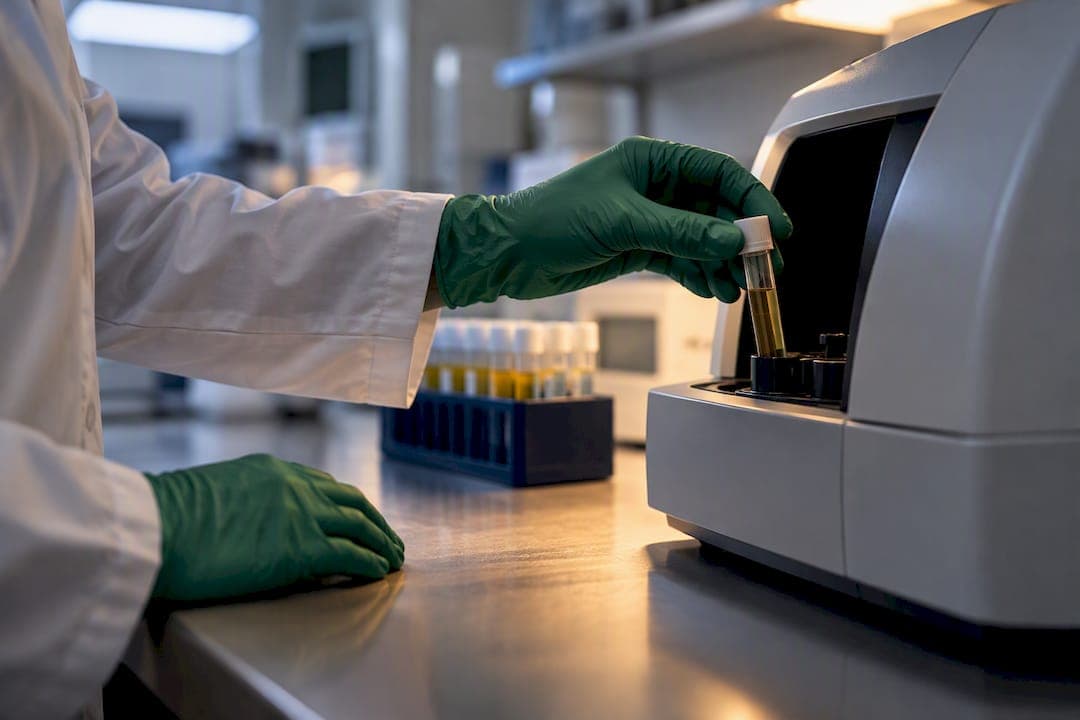
Most negative lab-based screens come back within 24 to 48 hours of the lab receiving the specimen, according to USDTL's own reporting. Non-negative results take longer because they trigger confirmatory testing and Medical Review Officer verification, which together often add one to several additional business days. The exact wait depends on the test type used and how complete the paperwork and specimen collection were.
TL;DR:
- Confirmatory testing and MRO review typically add three to six business days to non-negative lab results, depending on test type and paperwork completeness.
- Urine test negatives are usually reported the next business day, while positives require additional days for verification and split-specimen testing if disputed.
- Hair testing results tend to be slower, often taking up to a week for confirmed positives, compared to urine or saliva testing.
- Delays often stem from paperwork errors or disputes at collection rather than lab processing times, emphasizing the importance of proper documentation.
- Implementing proactive collection procedures and crossing checklists can reduce delays and ensure faster, more defensible screening outcomes.
Table of Contents
- Typical turnaround times by test type and result
- Why some results take longer than others
- MRO review and DOT rules that shape the timeline
- A practical checklist to avoid delays
- Balancing speed and defensibility in hiring decisions
- How NurseFlex helps you cover shifts during screening windows
- Sources
- FAQ
Typical turnaround times by test type and result
The method you choose changes the wait more than almost anything else. Instant or point-of-care tests give a preliminary read in minutes, but that speed comes with a catch: any non-negative reading still has to go to a lab for confirmation before anyone can act on it.
Lab-based urine testing remains the most common route for pre-employment and DOT-regulated screening. Negative results are commonly reported the next business day after the specimen reaches the lab. A non-negative result needs confirmatory testing, and industry summaries place that added window at three to six business days.
Oral fluid testing has become popular for its shorter collection process and comparable speed. Negative saliva results are often available within 24 hours of lab receipt, and confirmatory steps for non-negatives follow a process similar to urine.
Hair testing runs on a slower clock because of the extraction and analysis steps involved. Employer-facing guidance suggests negative hair results generally land in the same range as urine but skew a little slower, with confirmed positives sometimes taking up to a week to finalize, per industry turnaround summaries.
Blood testing is used selectively, often for specific medical or legal circumstances rather than routine employment screening. Turnaround depends heavily on which substance is being measured and which lab method the case calls for, and it can end up comparable to or longer than a urine confirmatory.
Here's how the main test types stack up on speed:
- Instant or point-of-care tests: a preliminary result in minutes, though non-negatives still need lab confirmation.
- Urine (lab-based): negatives typically reported the next business day, positives adding several days for confirmation.
- Oral fluid: negatives often reported within 24 hours, with confirmatory steps mirroring urine testing.
- Hair: generally the slowest standard method, especially once a confirmatory step is triggered.
- Blood: turnaround varies by analyte and lab method and can rival or exceed a urine confirmatory.
Some large lab networks also offer rapid urine screening at patient service centers, where a negative result can reach the ordering client within a few hours in certain contexts, based on how LabCorp and similar networks describe their PSC services.
Why some results take longer than others
Every drug screen starts with an immunoassay, a quick chemical screen that flags anything that looks non-negative. That part moves fast. What slows things down is what happens next: any presumptive positive has to be confirmed using a more precise method like GC-MS or LC-MS/MS, and that step simply takes longer to run properly.

A next-business-day report is standard for negatives, but confirmatory testing typically adds one to two more business days, according to USDTL's stated turnaround windows. That gap alone accounts for a large share of the difference between a quick negative and a slower non-negative.
A few other factors extend the clock further:
- Reanalysis for defensibility. Accredited labs sometimes rerun a specimen or batch to protect the forensic integrity of the result, which USDTL notes can shift the expected reporting window.
- Split-specimen testing. When a donor disputes a confirmed positive, the lab tests the reserved Bottle B specimen, adding real days to the final verified result.
- Documentation errors. A missing signature or an incomplete chain-of-custody form can pause testing entirely or force a rejected specimen, a scenario SAMHSA's MRO guidance documents in its case studies on fatal flaws.
None of these delays mean something went wrong. They mean the system is doing what it's supposed to do: protect the accuracy of a result before anyone relies on it.
MRO review and DOT rules that shape the timeline
For federally regulated testing, a lab-confirmed non-negative doesn't go straight to the employer. It goes to a Medical Review Officer first, and that review step is where a lot of the added time actually lives.
The DOT's MRO guidance spells out what has to happen before a result becomes final:
- The MRO reviews the chain-of-custody form and confirms the lab followed proper procedure.
- The MRO conducts a verification interview with the donor when a confirmed non-negative comes back.
- The MRO must offer split-specimen testing if the donor disputes the result.
- The MRO reports the verified result to the employer without unnecessary delay, while still protecting the donor's confidentiality.
If a donor needs time to produce a prescription record or see a referral physician to explain a result, that verification step can stretch by several more days. Background guidance on MRO practice notes that donors may get up to five days to supply medical evidence for a legitimate explanation, a window built into the process specifically so a defensible result isn't rushed.
A practical checklist to avoid delays
Most delays trace back to something preventable at the collection stage rather than to the lab itself.
- Fill out the chain-of-custody form completely. Double-check donor contact information and signatures before the specimen ever leaves the collection site.
- Match the test to the decision's urgency. A point-of-care test fits a fast internal check, while a lab-based urine or hair test fits a decision that needs to hold up to scrutiny.
- Ask the collection site for the lab's expected turnaround window and how to reach the lab directly if a result seems overdue.
- Know what to ask if a result is delayed. Request the specimen's lab receipt date, whether confirmatory testing was triggered, and whether the MRO has the file yet.
Pro Tip: Keep a copy of the completed chain-of-custody form on hand. If a result stalls, that paperwork is usually the first thing the lab or MRO will ask you to reference.
Balancing speed and defensibility in hiring decisions
A fast negative is worth acting on quickly. A slow non-negative is worth waiting on, because the extra days are what make the result defensible if it's ever challenged. Employers who build in a buffer, rather than assuming every result lands in 24 hours, avoid the scramble that comes with a confirmatory delay. Flexible or temporary coverage during that window keeps a shift staffed without pressuring anyone to skip a verification step.
— Flexible
How NurseFlex helps you cover shifts during screening windows
NurseFlex doesn't change how fast a lab or MRO works. It changes what you do while you wait. When a promising candidate's screen is still moving through confirmatory testing, you can post the open shift and get matched with a flexible nurse who can start right away.

- Post a remote or flexible nursing role through NurseFlex's employer landing page in minutes.
- Use the free matching service to find travel nursing coverage for the gap.
- Set up job alerts so you know the moment a qualified nurse becomes available.
Facilities covering specialty roles, from utilization review to insurance nursing, can use the same approach: keep the shift covered, let the screening finish properly, and bring your verified hire on once the file closes.
Sources
- Turnaround Time - USDTL (blog)
- Back to Basics' for Medical Review Officers | U.S. Department of Transportation
- MRO guidance manual and case studies (SAMHSA)
- Urine drug testing - USDTL (testing page)
FAQ
What is the typical turnaround time for drug testing results?
Most negative lab-based screens are reported the next business day after the lab receives the specimen, based on USDTL's stated turnaround. Non-negative results take longer because they require confirmatory testing and, for regulated tests, MRO verification.
Why is it taking so long for a drug test result to come back?
A delay usually means the sample triggered confirmatory testing, which uses a more precise method than the initial screen and simply takes more time to run. It can also mean the lab needed to reanalyze a specimen for defensibility, or that a Medical Review Officer is still completing a required verification interview under DOT guidance.
How long do LabCorp drug screens take to come back?
Large lab networks like LabCorp can offer rapid urine screening at patient service centers, where a negative result may be available to the ordering client within a few hours in some contexts. A non-negative result still requires lab confirmation and, for regulated tests, MRO review before it becomes final.
Can a drug test go back 7 years?
No, standard employment drug tests don't detect use from years earlier. Detection windows vary by specimen type, urine typically covers a matter of days, while hair testing can reflect a longer history of up to a few months, so a seven-year lookback isn't realistic for common test types.
What happens if there's an error on the chain-of-custody form?
A missing signature or incomplete form can pause testing or force the lab to reject the specimen entirely, according to SAMHSA's MRO guidance. That's why double-checking the paperwork at collection is one of the simplest ways to avoid an avoidable delay.