
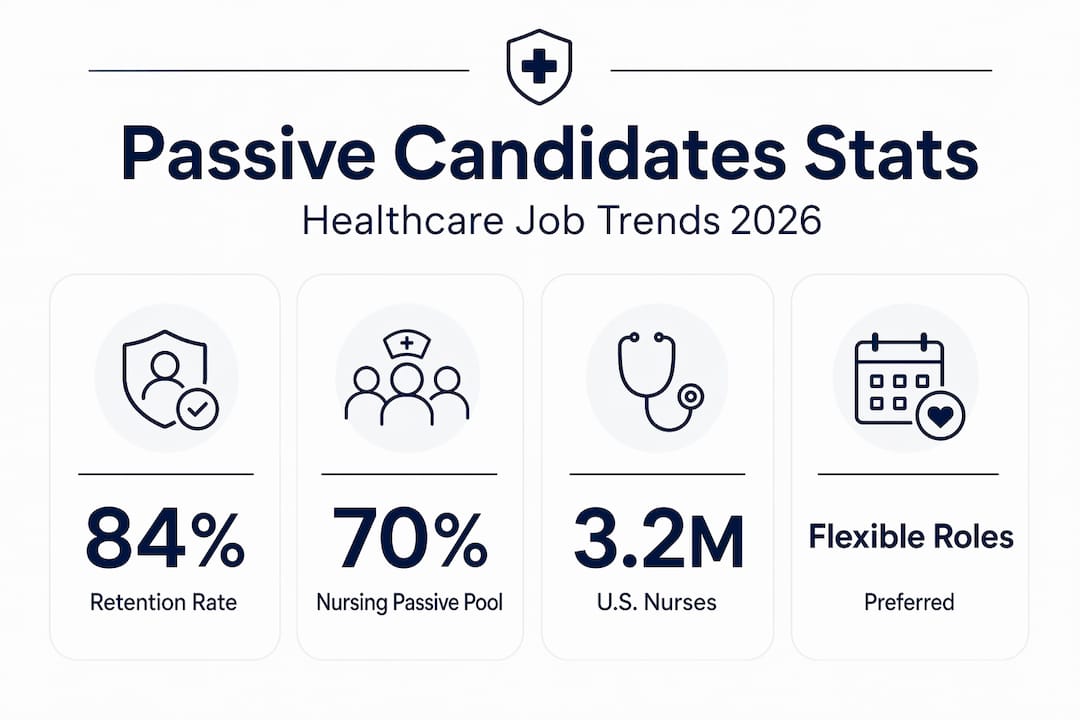
Most healthcare professionals assume job searching means updating a resume and hitting "apply." But what is passive job searching in healthcare, really? It's the opposite of that frantic approach. It's staying employed, staying sharp, and quietly making yourself available to the right opportunities before they're ever posted publicly. And the scale of it might surprise you. Over 70% of the nursing workforce is already doing this, representing more than 3.2 million registered nurses in the U.S. alone. This guide breaks down what passive job searching means for your healthcare career and how to do it well.
Table of Contents
- Key Takeaways
- What passive job searching means for healthcare professionals
- Why passive candidates are valuable in healthcare recruitment
- Practical strategies for effective passive job searching
- Common pitfalls in passive job searching
- Combining passive and active strategies for career growth
- My perspective on passive searching in healthcare careers
- Ready to explore flexible healthcare opportunities?
- FAQ
Key Takeaways
| Point | Details |
|---|---|
| Passive search is strategic | You stay employed while quietly signaling openness to better opportunities. |
| Healthcare passive talent is dominant | Over 70% of nurses are passive candidates, making this the largest talent pool in the field. |
| Discretion protects your position | Use recruiter-only settings and personal email to protect your current role while exploring options. |
| Passive candidates outperform active ones | Passive healthcare candidates show 84% first-year retention versus 71% for active job seekers. |
| Combining both approaches works best | Pairing passive visibility with occasional active outreach fills the gaps the hidden job market leaves open. |
What passive job searching means for healthcare professionals
Here's the core distinction. Active job searching means you're currently applying to open positions, submitting resumes, and scheduling interviews. Passive job searching means you're not actively applying, but you're open to hearing about the right opportunity if one comes along. You're employed, performing well, and not broadcasting your availability.
In healthcare, passive candidates behave differently than their active counterparts. They don't flood job boards. Instead, they maintain a polished LinkedIn profile, attend professional conferences, and engage thoughtfully in online clinical communities. A hiring manager or recruiter notices them through a mutual connection or a well-placed comment on a relevant post. That's the subtle signal at work.
Common passive job searching tactics in healthcare include:
- Keeping your professional profile current with certifications, specialties, and recent accomplishments
- Engaging with professional associations like the American Nurses Association or specialty-specific organizations
- Accepting informational calls from recruiters without committing to anything
- Building referral relationships with colleagues who move between facilities
- Checking job board strategies occasionally for market awareness without applying
Your digital footprint matters more than most healthcare professionals realize. Recruiters check mutual connections and engagement before reaching out, meaning that thoughtful comment you left on a clinical discussion thread can start a conversation that leads somewhere real.
Pro Tip: Set your LinkedIn to "Open to Work" with the recruiter-only privacy setting so your current employer cannot see your status. It keeps your options open without creating awkward conversations at work.
Why passive candidates are valuable in healthcare recruitment
Employers are not just looking for warm bodies to fill shifts. They're competing for nurses and allied health professionals who are already proving themselves somewhere else. That's exactly who passive candidates are.
The numbers back this up clearly. Passive healthcare candidates are 120% more likely to seek impactful work and show meaningfully stronger retention in their first year on the job. For healthcare organizations, that matters. High turnover is expensive in both dollars and disruption to patient care.
| Metric | Passive candidates | Active candidates |
|---|---|---|
| First-year retention rate | 84% | 71% |
| Likelihood to seek impactful work | 120% more likely | Baseline |
| Likelihood to seek challenging roles | 33% more likely | Baseline |
| Average time to fill (direct sourcing) | 45 to 55 days | 82 days |
"Direct sourcing of passive candidates reduces time to fill from 82 days to roughly 45-55 days, and lowers cost per hire from $3,200-$5,800 down to $800-$2,100."
For you as a healthcare professional, this value translates into leverage. Because employers know passive candidates are selective, they typically approach them with stronger offers, better schedules, and more flexibility than they would present to an open applicant. You're negotiating from a position of strength rather than urgency.
Passive candidates also tend to prioritize career growth and work-life balance over salary alone. That means flexible scheduling, meaningful assignments, and advancement potential carry real weight in the conversation.
Practical strategies for effective passive job searching
Being a passive candidate does not mean being passive about your career. You still need to show up where the right people can find you. The difference is that you do it quietly and with intention.
Here's how to build a strong passive presence in healthcare:
- Optimize your LinkedIn profile with your specialty front and center. Include your certifications, clinical areas, and a headline that reflects what you do. Recruiters search by skill set, not job title alone.
- Use recruiter-only privacy settings. LinkedIn's discreet settings allow you to signal openness without letting your current employer see your status. This is one of the most practical passive job search tips available.
- Publish micro-content. Short posts about a clinical challenge you solved or a patient experience that shaped your practice signal expertise without screaming "I'm looking." Career experts recommend strategic profile visibility through content and engagement rather than overt announcements.
- Respond to recruiter outreach professionally. Even if you're not ready to move, a 15-minute call builds a relationship you can activate later. Say something like: "I'm not actively looking right now, but I'm always open to learning about strong opportunities."
- Keep your resume updated in a personal folder. You won't need it immediately, but having it ready means you can move quickly when the right role appears.
- Use a personal email for all career-related communication. Never use your employer's email system for anything related to exploring other positions.
- Build your professional network steadily. Strong mutual connections can trigger discreet recruiter inquiries organically, putting you in front of opportunities you never applied for.
Pro Tip: Timing matters. If a recruiter reaches out and you're interested, schedule calls outside your shift hours. Use lunch breaks or personal time. Never take career calls on your employer's time or using their equipment.
One healthcare employment strategy that gets overlooked: staying current. Completing a new certification or attending a continuing education conference raises your visibility to recruiters without any job-search activity whatsoever.

Common pitfalls in passive job searching
The biggest mistake healthcare professionals make is confusing passive searching with zero effort. The second biggest is going too visible, too fast.
Watch out for these specific missteps:
- Using the public "Open to Work" banner on LinkedIn. This is visible to everyone, including colleagues and supervisors at your current facility. Switch it to the recruiter-only setting instead.
- Over-sharing your intentions. Telling coworkers or even close colleagues that you're "looking around" creates risk. Healthcare is a smaller world than it appears, and word travels.
- Broadcasting frustration online. Venting about scheduling, management, or workload on public forums is a red flag to recruiters and can quietly close doors before they open.
- Letting your current performance slip. Disengagement signals reduce hireability. If you stop contributing in meetings or reduce your usual advocacy, recruiters and your own leadership take note.
- Relying solely on job boards. Job boards are useful for market awareness, but passive job searching healthcare-style means combining that awareness with relationship-building and profile presence.
Pro Tip: Act like you're staying. Your best protection during a passive search is a reputation for being fully present. Strong performance and visible engagement at your current role make you more attractive to new employers, not less.
The irony of passive job searching is that the behaviors that make you a great candidate elsewhere, including consistency, professionalism, and excellence in your current role, are the same behaviors that protect your position while you look.
Combining passive and active strategies for career growth
There's a persistent myth in healthcare employment that the "hidden job market" contains hundreds of unadvertised opportunities waiting to be unlocked. The reality is more nuanced. Only 6 to 10% of jobs are truly hidden and never publicly posted. Most jobs are posted, but many are filled through referrals or direct recruiter outreach before the general public ever sees them.
That's where the combination of passive and active approaches wins.
| Approach | Best for | Risk level |
|---|---|---|
| Passive only | Exploring without commitment | Low |
| Active only | Urgent career change | High visibility |
| Combined approach | Strategic career advancement | Balanced |
The combined approach works like this: you maintain passive visibility through your profile and network, which keeps inbound opportunities coming. When something strong appears, you shift briefly into active mode, applying directly or asking a mutual connection for an introduction. Then you step back to passive again.
Referrals and direct networking are especially powerful here. Referrals and direct networking account for a meaningful share of actual hires, while job boards drive about 47% of placements. Passive candidates who build both channels give themselves the widest range of options.
For healthcare professionals evaluating flexible work, this matters particularly. Flexible roles, including per diem, PRN, and contract positions, are frequently filled through direct outreach rather than posted listings. Staying visible and connected keeps you in that pipeline automatically.
My perspective on passive searching in healthcare careers
I've worked alongside healthcare professionals at every stage of their careers, and one thing stands out consistently. The nurses and allied health workers who get the best opportunities are rarely the ones submitting 40 applications a week. They're the ones who built their reputation quietly, kept their profiles sharp, and answered the right call at the right time.
What I've noticed is that most healthcare professionals undervalue passive job searching because it feels like waiting. It's not waiting. It's positioning. There's a real difference between sitting still and standing where the right people can see you.
The challenge I hear most often is the fear of being caught looking. That fear is valid but manageable. The recruiter-only settings exist precisely for this reason. Using a personal email, staying off employer devices, and keeping performance high are not complicated steps. They're just habits most people don't build until they need them.
My honest take: the professionals who benefit most from passive job searching in healthcare are the ones who start before they feel urgent about leaving. When you're still happy in your current role, you can evaluate opportunities without desperation. That clarity leads to better decisions and better career outcomes.
A balanced approach is almost always most effective. Use passive strategies to stay visible and informed. Use active strategies selectively when something genuinely worthy of your attention appears. The combination is more powerful than either alone.
— Flexible
Ready to explore flexible healthcare opportunities?
You've built the knowledge. Now put it to work. Flexiblenursingcareers connects nurses and healthcare professionals with flexible job opportunities matched to your specialty, schedule, and preferences. Whether you're fully passive and just exploring, or ready to make a move today, the platform meets you where you are.

Unlike traditional job boards that require long applications and waiting, Flexiblenursingcareers uses real-time matching to surface roles that actually fit your availability and skills. Removing friction from the application process is the dominant trend in healthcare hiring right now, and Flexiblenursingcareers is built around that principle. Per diem, PRN, contract, and flexible full-time roles are all available. Sign in or create your account today and see what fits. No pressure, no commitment required upfront.
FAQ
What is passive job searching in healthcare?
Passive job searching in healthcare means staying employed while quietly remaining open to new opportunities. You maintain a strong professional profile and network without actively applying to posted positions.
How do I search for jobs passively without my employer finding out?
Use LinkedIn's recruiter-only "Open to Work" setting so your status is hidden from employers. Always use a personal email and handle all recruiter communication outside of work hours.
Are passive candidates actually better hires in healthcare?
Yes. Passive healthcare candidates show 84% first-year retention compared to 71% for active candidates and are significantly more likely to seek challenging, impactful work.
How big is the passive candidate pool in nursing?
Approximately 70% of the nursing workforce is passive, which represents over 3.2 million registered nurses in the United States.
Should I use job boards if I'm passively searching?
Job boards are useful for tracking the market and salary benchmarks, but the best passive job search healthcare strategy combines profile visibility and networking with occasional targeted applications rather than relying on boards alone.