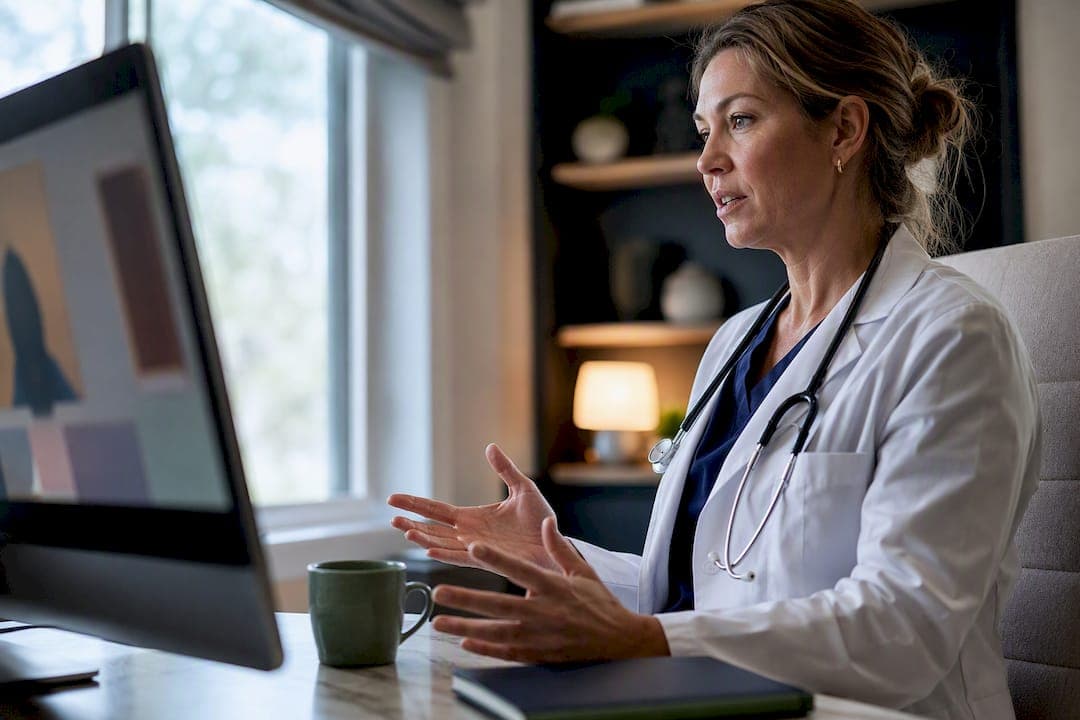
You can find telehealth nurse practitioner roles on national job marketplaces, employer telehealth career pages, specialized clinical staffing platforms, and NurseFlex Jobs. The rule that decides whether you can actually take one: you need an active license in the state where your patient is physically located, not just where you live. Check that licensure note on every posting before you apply, or start updating your multistate status now.
TL;DR:
- A valid state license matching the patient's location is mandatory for telehealth nurse practitioners, regardless of where the provider is physically based.
- Telehealth licensure depends on the patient's state, with some states participating in the Nurse Licensure Compact, but many still require individual licensing for non-compact states.
- Employers prefer candidates with one to two years of direct patient care experience, proficiency in EHR systems, and familiarity with remote communication tools.
- Telehealth nurse practitioner pay averages around $97,000 annually, with higher rates for specialties like mental health and flexible scheduling arrangements.
- Using platforms like NurseFlex Jobs accelerates the job search process by filtering opportunities based on licensure, specialty, and availability upfront.
Table of Contents
- How do I search for telehealth nurse practitioner jobs?
- What are the licensure rules for telehealth NPs?
- What do telehealth employers look for in NP candidates?
- What does telehealth NP pay look like?
- What's the credentialing process for a telehealth NP job?
- Why NurseFlex Jobs speeds up your telehealth search
- A hiring-insider take on speeding up your telehealth search
- Start your telehealth NP search with NurseFlex Jobs
- Authoritative resources
- Sources
How do I search for telehealth nurse practitioner jobs?
Broad marketplaces like LinkedIn list thousands of remote NP openings, but they mix in roles that only sound like telehealth. Specialized staffing platforms filter better because they already sort by license state, specialty, and shift type, which cuts your search time down considerably.
A few habits separate NPs who land interviews from those who send fifty applications into the void:
- Search "telehealth nurse practitioner," "virtual NP," and "remote APRN" separately. Employers use all three inconsistently.
- Set alerts on two or three platforms instead of checking manually, since telehealth postings fill fast.
- Complete your profile with licensure state, specialty, and availability. Employers filter on these before they read a resume.
- Read the residency requirement line first. A posting that says "must reside in a compact state" eliminates half the applicant pool immediately.
Pro Tip: Flag your availability as "immediate" only if your license and background check are current. Recruiters deprioritize candidates who accept an interview but then need three weeks to get credentialed.
What are the licensure rules for telehealth NPs?
Telehealth licensure follows the patient, not the provider. If your patient is sitting in Ohio during the visit, you need Ohio licensure, or coverage under a compact that Ohio recognizes, regardless of where you're logged in from.
The Nurse Licensure Compact simplifies this for RNs across most member states, but APRN compact adoption has lagged far behind. Enough states have yet to implement it that you should plan for individual state licensure whenever an employer's patient base spans non-compact territory.
Three moves protect you here:
- Map every state your prospective employer serves before you accept an offer.
- Ask directly whether the employer reimburses or sponsors additional state licenses. Many do, according to industry reporting on temporary telehealth licensing rules.
- Verify your compact eligibility annually. Rules shift as more states join or stall.
Pro Tip: Treat a multistate license as a career asset, not paperwork. It's one of the most underused ways to widen your job pool without changing anything about your clinical skill set.
What do telehealth employers look for in NP candidates?
Most telehealth employers want at least a year or two of direct patient care before they'll hand you a virtual caseload; they're betting on your clinical judgment holding up without a physical exam in front of you.
Certifications aren't always mandatory, but they carry weight. Ambulatory care certification and telehealth-specific training signal you understand remote triage limits, not just the technology.
Technical fluency matters more than most NPs expect walking in:
- EHR competency in Epic or Cerner, since most employers assume you can navigate one on day one.
- Comfort with video visits and asynchronous messaging platforms.
- Documented communication skills for patients who can't be examined hands-on.
- A resume line naming specific remote tools you've used, not just "telehealth experience."
What does telehealth NP pay look like?
Telehealth NP compensation runs meaningfully above telehealth RN pay, and the gap widens with specialty and experience. Job-site estimates put telehealth NP pay around $97,000 in some markets, though Bureau of Labor Statistics data on nurse practitioners broadly shows strong projected growth and higher baseline wages that support those higher telehealth figures.
Scheduling models vary more than in bedside roles:
- Per-diem and block-shift arrangements for NPs covering triage lines.
- Salaried remote roles for primary care or chronic disease management.
- Session-based pay for psychiatric NPs (PMHNP), who often command premium rates given demand for virtual mental health access.
- Benefits packages that sometimes include licensure reimbursement, a real factor in total compensation once you're covering multiple states.
What's the credentialing process for a telehealth NP job?
Credentialing takes longer than most NPs budget for, mostly because license verification and malpractice documentation move slower than the interview itself.
- Submit your application with an updated resume and current license numbers.
- Expect license verification against every state your employer's patients live in.
- Complete a background check, standard for any clinical role handling patient data.
- Provide proof of malpractice coverage, either your own or employer-sponsored.
- Finish platform training on the specific video, EHR, and messaging tools your employer uses.
Have these ready before you apply, not after an offer:
- Current state license numbers and expiration dates
- Malpractice insurance documentation
- DEA registration if prescribing is part of the role
- References from supervisors familiar with your remote or telehealth work
Follow up with recruiters every week, not daily. A short, specific email asking about credentialing status reads as organized. Daily check-ins read as anxious.
Why NurseFlex Jobs speeds up your telehealth search
NurseFlex Jobs matches you to open roles in real time based on your license state, specialty, and availability, instead of making you scroll through postings that don't fit your credentials. That matters most in telehealth, where the licensure mismatch is the single biggest reason qualified NPs get filtered out before a recruiter even looks at their resume.
Getting started takes three steps:
- Create a profile and list every active state license, not just your primary one.
- Upload license and certification documents directly so credentialing teams aren't waiting on you later.
- Set telehealth-specific preferences, including specialty and shift type, so the matching engine surfaces roles you'd actually take.
Standard job boards make you guess which postings fit your licensure. NurseFlex's matching model does that filtering upfront, which shortens the distance between "applied" and "credentialed."
A hiring-insider take on speeding up your telehealth search
Prioritize your license portfolio before your resume. Recruiters move fastest on candidates who already cover their patient population, and negotiate license reimbursement openly. It's a normal ask. On work-life balance, telehealth NP roles offer flexibility, not fewer hours. Chronic care and triage caseloads still fill a full shift.
— Flexible
Start your telehealth NP search with NurseFlex Jobs
NurseFlex Jobs gets you in front of telehealth openings without the delay of generic job boards sorting through postings that don't match your license state. The real advantage: NurseFlex filters by your actual credentials from the start, so you spend less time applying to roles you can't legally accept and more time talking to employers who already know you fit.

Before you sign up, have your current license numbers, specialty preferences, and availability ready. Then head to the telehealth jobs page to browse current openings, or create your profile to start getting matched right away.
Authoritative resources
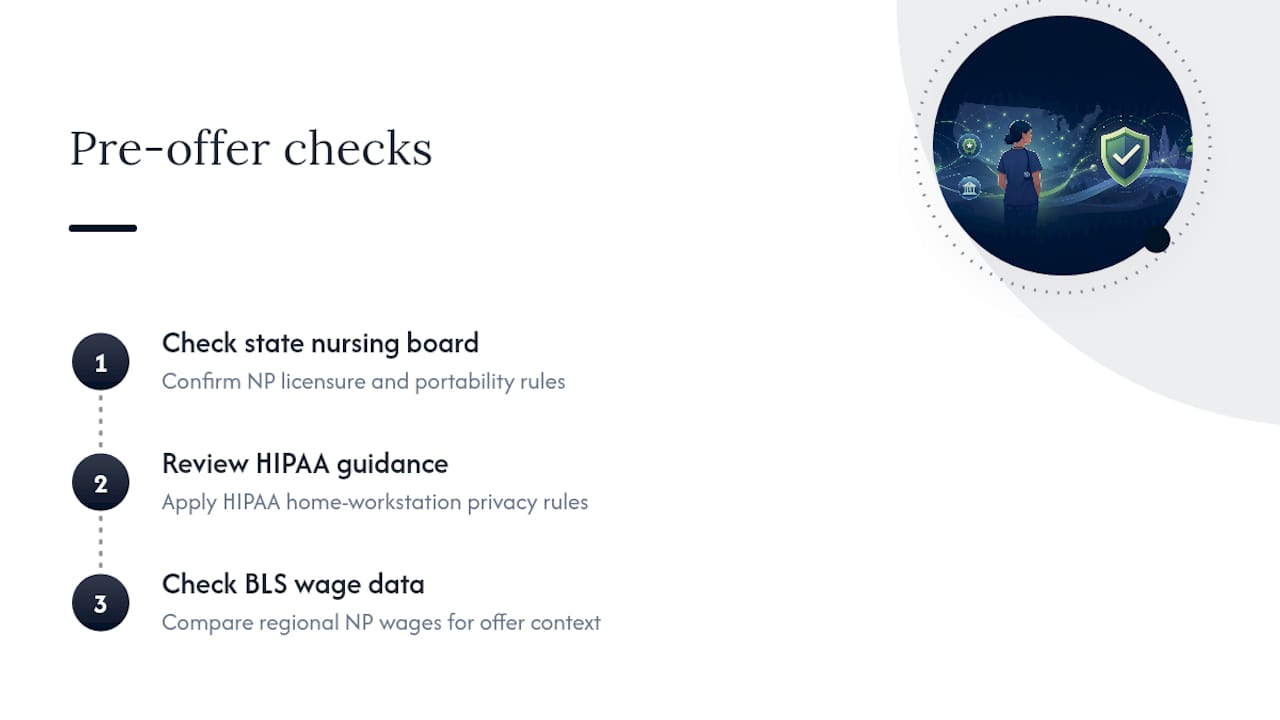
Verify licensure through your state board of nursing, review HIPAA guidance for home workstations, and check BLS data for wage context before accepting an offer.
Sources
- How telehealth nursing works and how to become a telehealth nurse — Coursera
- How to Become a Telehealth Nurse: The Career Guide | Sermo
- U.S. Bureau of Labor Statistics