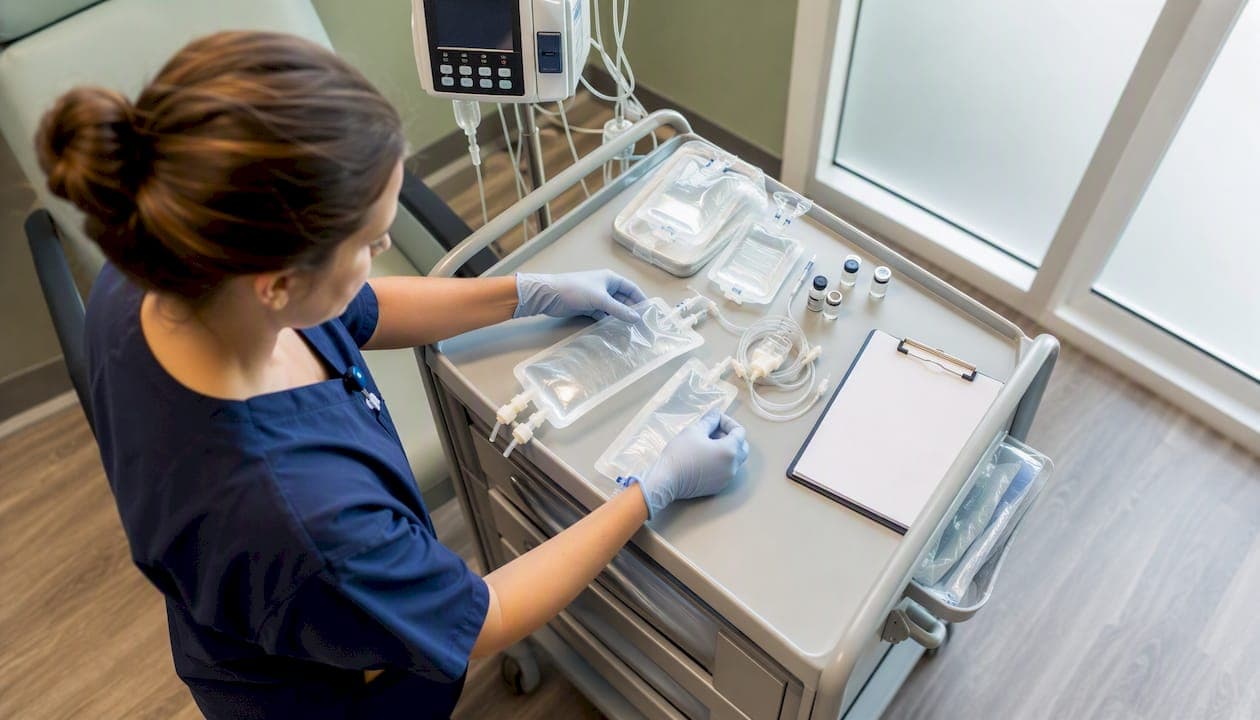
The fastest route to high-paying oncology travel nursing jobs is a specialty marketplace that matches your oncology skills to live, vetted assignments in real time. Flexiblenursingcareers's NurseFlex Jobs platform does exactly that: it surfaces verified oncology listings, filters by unit type and shift pattern, and gets you placed faster than a traditional agency. Typical advertised weekly pay for oncology travel RNs varies depending on specialty, location, and shift.
Three things set NurseFlex apart for oncology RNs:
- Live, verified listings with real-time pay and availability data, so you see actual openings, not stale postings
- Oncology-aware filters that let you search by unit type (infusion clinic, inpatient oncology, radiation oncology) and required certifications
- Fast credentialing workflows that cut the time from application to first shift
Sign up or run a live oncology search on NurseFlex Jobs now to see current assignments and pay rates in your target locations.
Table of Contents
- What do live oncology travel listings actually look like?
- What pay and benefits should you expect as an oncology travel RN?
- What qualifications do facilities require for oncology travel RN positions?
- What should you expect from assignment logistics and timelines?
- Why oncology travel nursing is clinically different from other travel roles
- Key Takeaways
- What oncology travel nursing actually offers you
- NurseFlex Jobs: your next oncology travel assignment starts here
- Useful resources for oncology travel nurses
What do live oncology travel listings actually look like?
Every listing on a quality oncology travel platform tells you what you need to know before you apply. Standard fields include weekly pay, hours per week, shift pattern, contract length, start date, unit type, minimum oncology experience, required certifications, and location. Knowing how to read and filter those fields quickly saves you hours.
The unit type field matters most. Oncology travel assignments fall into three main categories:
- Infusion centers and ambulatory clinics: Outpatient IV chemotherapy and biologic infusions. Demand here is growing fast as oncology care shifts toward ambulatory settings, and nurses with infusion experience often have more listings to choose from.
Effective filtering cuts your search time significantly. On NurseFlex, prioritize these three filters first: specialty set to "oncology" or "infusion," certification field set to "OCN preferred," and availability set to "immediate start." Those three alone narrow a broad list to the assignments most likely to match your profile and pay at the higher end.
When reviewing pay, check whether the listed rate is gross weekly (all-in) or base only. A listing showing $2,400/week gross looks different from one showing $1,600/week base plus stipends. Always confirm the breakdown before you apply.
Before accepting any assignment, verify the facility's accreditation status through The Joint Commission. A quick search on their public database confirms the facility meets national quality and safety standards.
Pro Tip: Set a saved search alert with filters for "infusion clinic," "OCN preferred," and "immediate start." Alerts sent the moment a new listing posts give you a first-mover advantage on the highest-pay openings.
What pay and benefits should you expect as an oncology travel RN?
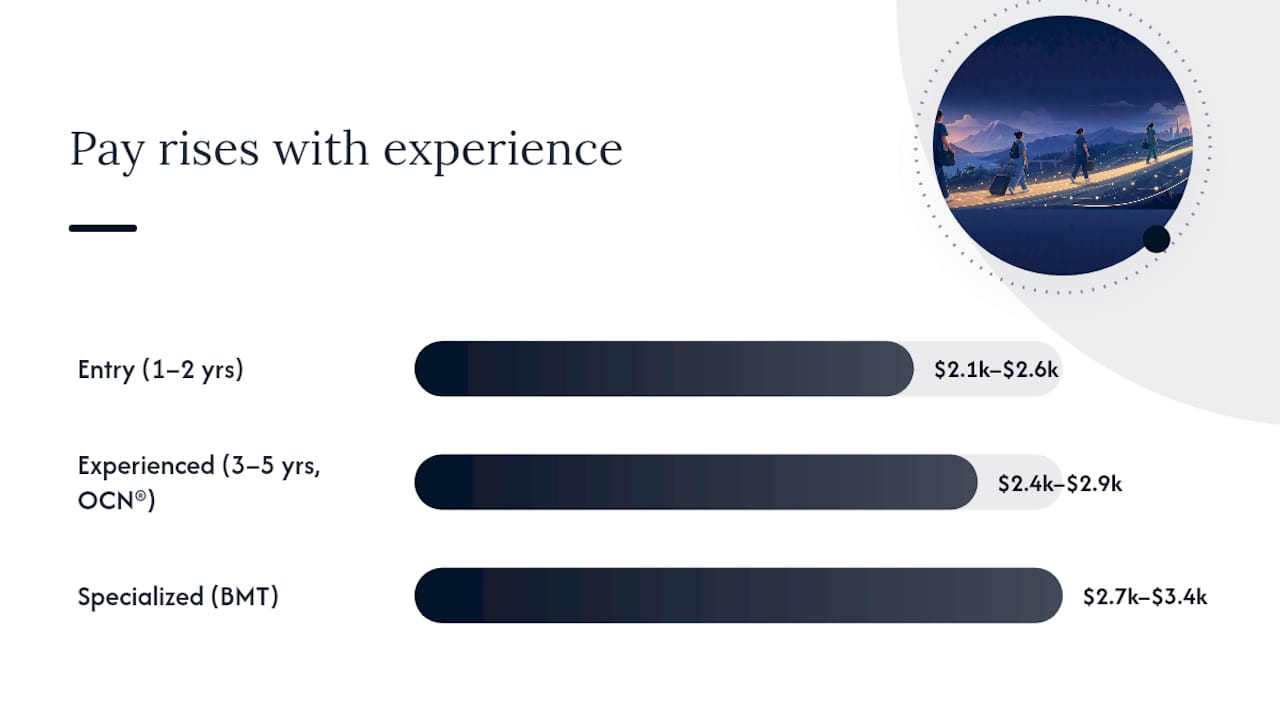
Pay for oncology travel nurses varies by experience level, specialty skills, shift, and location. The table below shows typical advertised weekly ranges across three experience tiers. Live jobs on NurseFlex frequently list weekly pay rates for oncology travel RNs in the $2,100–$3,400 range, depending on specialty, location, and shift. Here are the typical ranges you may see in current listings:
| Experience Tier | Typical Weekly Pay Range | Key Pay Drivers |
|---|---|---|
| Entry-level oncology traveler (1–2 yrs oncology) | $2,100–$2,600 | General inpatient oncology, day shift |
| Experienced oncology RN (3–5 yrs, OCN® certified) | $2,400–$2,900 | Infusion, chemo admin, OCN® credential |
| Highly specialized (BMT, advanced infusion, outpatient) | $2,700–$3,400 | Bone marrow transplant, multi-unit versatility |
Beyond base pay, a standard travel package includes several components worth negotiating:
- Retirement/401(k) eligibility: Less common in short-term travel packages than in permanent roles. University HR benefit structures illustrate how permanent employer benefits compare to what travel packages typically provide.
Ask recruiters these four questions before signing: What is the gross weekly pay versus the taxable base? Are stipends guaranteed if the facility cancels shifts? What is the overtime policy? Are guaranteed hours written into the contract?
When you work across state or municipal lines, local worker-protection rules apply to you. Resources like the NYC worker-rights page show what basic wage and stipend protections look like at the local level. Check the relevant state or city authority for every new assignment location.
What qualifications do facilities require for oncology travel RN positions?
Most facilities posting oncology travel assignments expect a specific set of credentials before they will credential you. Here is a practical checklist:
Mandatory requirements:
- Active RN license in the assignment state (or a compact license covering it)
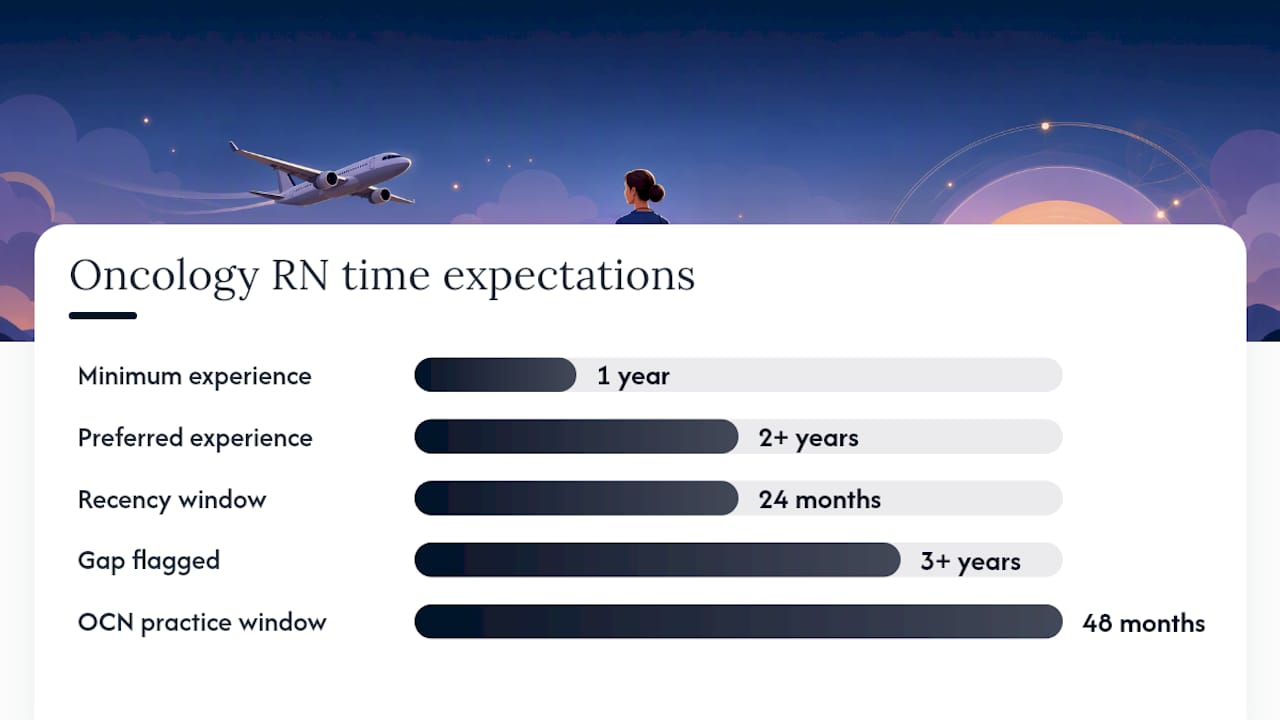
- Minimum one year of recent oncology clinical experience, with most facilities preferring two or more years
- Experience within the last 24 months (recency matters — a gap of three or more years raises flags)
- BLS certification, current
- ACLS certification for inpatient oncology and BMT units
Preferred certifications:
- OCN® (Oncology Certified Nurse): Issued by the Oncology Nursing Certification Corporation (ONCC), the OCN® requires an active RN license, 2,000 hours of adult oncology practice in the last 48 months, and two years of RN experience. The exam is 165 questions and certification lasts four years. Facilities treat it as a direct signal of validated oncology competency.
- CPHON® (Certified Pediatric Hematology Oncology Nurse): Required or strongly preferred for pediatric oncology assignments.
- Chemotherapy and biologic administration certification: Often required for infusion roles. ONS/ONCC chemotherapy-biologic certification is the recognized standard.
The Oncology Nursing Society (ONS) offers continuing education bundles, virtual conferences, and certification prep resources that count toward OCN® contact hours. Membership also signals professional commitment to hiring facilities.
For credentialing packets, prepare digital copies of your license, certifications, immunization records, two professional references from oncology supervisors, and a skills checklist documenting chemotherapy administration experience. Facilities that move fast on oncology travelers expect this packet ready on day one of the credentialing process. Explore nursing career advancement pathways if you are planning your certification timeline around travel contracts.
What should you expect from assignment logistics and timelines?
Contract lengths for oncology travel nursing typically run 8–13 weeks, with 13-week contracts being the most common. Shorter contracts (4–8 weeks) exist for urgent fills and often pay a premium. Longer contracts can mean more stability but less flexibility to move to higher-paying markets. Understanding the types of short-term healthcare assignments available helps you choose the right contract structure for your goals.
Common shift structures in oncology travel assignments:
- 3x12: Most common for inpatient oncology floors; day or night options
- 4x10: Common in outpatient infusion centers and ambulatory clinics
- 5x8: Typical for radiation oncology and some clinic-based roles
- Night shift differentials generally add $3–$8/hour to base pay, and weekend differentials are negotiable
Facility types actively hiring oncology travelers include inpatient oncology floors, freestanding infusion centers, hospital-based ambulatory oncology clinics, radiation oncology departments, and bone marrow transplant units.
Here is a typical placement timeline from application to first shift:
- Day 1–2: Submit profile and credentials on NurseFlex Jobs
- Day 3–5: Recruiter match and facility review of your profile
- Day 5–10: Credentialing packet submitted and verified by facility
- Day 10–14: Offer extended, contract signed
- Day 14–21: Pre-employment health screening, orientation scheduled
- Day 21–28: First shift
Pro Tip: Request a contract extension conversation at week 8 of a 13-week assignment. Facilities prefer to extend a credentialed traveler over starting a new search, and that leverage is worth $50–$150 more per week if you ask at the right time.
Why oncology travel nursing is clinically different from other travel roles
Oncology nursing is not a variation of med-surg nursing. Roswell Park Comprehensive Cancer Center describes oncology nurses as trained specifically for chemotherapy administration and the longitudinal, relationship-centered care that cancer patients require. That distinction matters when you are presenting yourself to a hiring facility as a travel nurse.
Oncology nurses build deep, ongoing relationships with patients across treatment cycles, recognize oncologic emergencies like neutropenic fever and tumor lysis syndrome, and manage the physical and emotional complexity of cancer care in ways that general nursing training does not cover. That depth of specialty practice is what facilities are paying for when they hire an oncology traveler.
The shift toward outpatient care is reshaping which assignments are available. NCBI literature on the role of the oncology nurse documents the growth of ambulatory oncology settings, including nurse-run infusion clinics, as a major structural change in how cancer care is delivered. For travel RNs, this means infusion and ambulatory experience now opens more assignment options than inpatient experience alone.
Certification through ONCC deepens your oncology knowledge and signals to hiring facilities that your competency has been independently validated. Facilities that credential travelers quickly look for OCN® as a shortcut to trust. ONS membership and continuing education reinforce that signal and keep your clinical knowledge current between assignments.
Pro Tip: In a travel nurse interview, describe a specific patient situation where you managed a treatment cycle across multiple visits. Facilities want to know you can build trust quickly and maintain continuity even in a short-term role. That one example does more than a list of certifications.
Key Takeaways
Oncology travel nurses who combine OCN® certification, documented infusion experience, and a fast-response profile on a specialty marketplace like NurseFlex Jobs consistently access the highest-paying assignments and shortest time-to-placement.
| Point | Details |
|---|---|
| Use a specialty marketplace | NurseFlex Jobs surfaces live, vetted oncology listings filtered by unit type, pay, and certification requirements. |
| Know your pay range | Typical weekly pay for oncology travel RNs is usually in the $2,100–$3,400 range, with the highest rates for those with advanced specialty skills and certifications. |
| OCN® certification pays off | ONCC's OCN® requires 2,000 oncology hours and signals validated competency that facilities pay a premium for. |
| Infusion skills expand your options | Ambulatory and infusion experience opens more listings as oncology care continues shifting to outpatient settings. |
| Flexiblenursingcareers for fast placement | Complete your NurseFlex profile with oncology hours, certifications, and immediate availability to get matched quickly. |
What oncology travel nursing actually offers you
Oncology travel nursing sits at a rare intersection: clinical depth, geographic freedom, and pay that reflects the complexity of the work. The relationship-centered nature of oncology care does not disappear in a travel role. You bring your specialty skills to patients who need them, in settings that may not otherwise have access to experienced oncology nurses. That professional exchange is genuinely meaningful.
The variety of clinical environments available through travel assignments, from high-acuity BMT units to outpatient infusion clinics, builds a breadth of oncology experience that most permanent positions cannot match in the same timeframe. Each contract adds a different facility's protocols, patient population, and team dynamic to your clinical foundation. Over two or three years of oncology travel nursing, that accumulation becomes a significant professional asset.
Flexiblenursingcareers's NurseFlex Jobs platform is built around exactly this kind of specialty matching: connecting oncology RNs to the assignments that fit their skills and schedule, not just the nearest open slot.
NurseFlex Jobs: your next oncology travel assignment starts here
Skip the generic job boards. NurseFlex Jobs gives oncology RNs direct access to verified travel assignments with real pay rates, oncology-specific filters, and a credentialing workflow that gets you placed in weeks, not months.

Here is what you get as a nurse on the platform: no-cost access to live oncology listings, specialty job alerts the moment a matching assignment posts, and a profile system that documents your oncology hours and certifications so facilities can credential you faster. The platform's real-time matching means your OCN® certification and infusion experience actually work in your favor, rather than getting buried in a generic applicant pool.
To get started: upload your RN license and oncology certifications, set your specialty preferences to oncology and infusion, and enable immediate availability. Then run a live search for travel nursing jobs to see current oncology assignments and pay rates in your target states. Your next high-paying oncology assignment is a profile away.
Useful resources for oncology travel nurses
These sources help you verify credentials, pursue certification, and stay current on oncology practice:
- What makes an oncology nurse different from other nurses? | Roswell Park Comprehensive Cancer Center - Buffalo, NY
- Role of the Oncology Nurse - Holland-Frei Cancer Medicine - NCBI Bookshelf
- Homepage | Oncology Nursing Society
- Oncology Certified Nurse (OCN®) | ONCC
- Oncology Nursing Certification Corporation |
- hr.uw.edu
- nyc.gov
This article provides general career and professional information for registered nurses. It is not legal, tax, or financial advice. Confirm stipend taxability, licensure requirements, and local worker protections with a qualified professional or the relevant state authority before accepting any assignment.