
A travel nurse recruiter is a specialized professional who connects qualified nurses with temporary hospital assignments by managing licensing, credential verification, compliance paperwork, and ongoing placement support. This role sits at the center of travel nurse staffing, acting as the primary link between nurses seeking flexible work and healthcare facilities facing critical shortages. Recruiters do far more than fill open shifts. They function as career advisors, contract negotiators, and compliance coordinators all at once. Understanding the role of travel nurse recruiter gives you a real advantage when entering or advancing in travel nursing, whether you are a seasoned RN or a recent graduate exploring your first assignment.
What does the role of travel nurse recruiter involve?
A travel nurse recruiter manages the full placement cycle, from sourcing candidates to supporting nurses through active assignments. The industry term for this function is "healthcare staffing coordinator," though "travel nurse recruiter" is the widely used working title across agencies and job boards. Both terms describe the same core responsibilities.
Recruiters screen resumes, verify multi-state licenses, confirm compliance documents, and coordinate interviews between nurses and hospital hiring teams. They also negotiate pay packages, housing stipends, and contract terms on behalf of the nurses they represent. According to recruiter workload data, a single recruiter manages 30–50 active job requisitions simultaneously. That volume explains why responsiveness from nurses matters so much during the placement process.

The recruiter also serves as a buffer between the nurse and the facility. When a hospital changes its requirements mid-process or delays an offer, the recruiter absorbs that friction and communicates updates clearly. That protective function is one of the most underappreciated benefits of working with a dedicated recruiter.
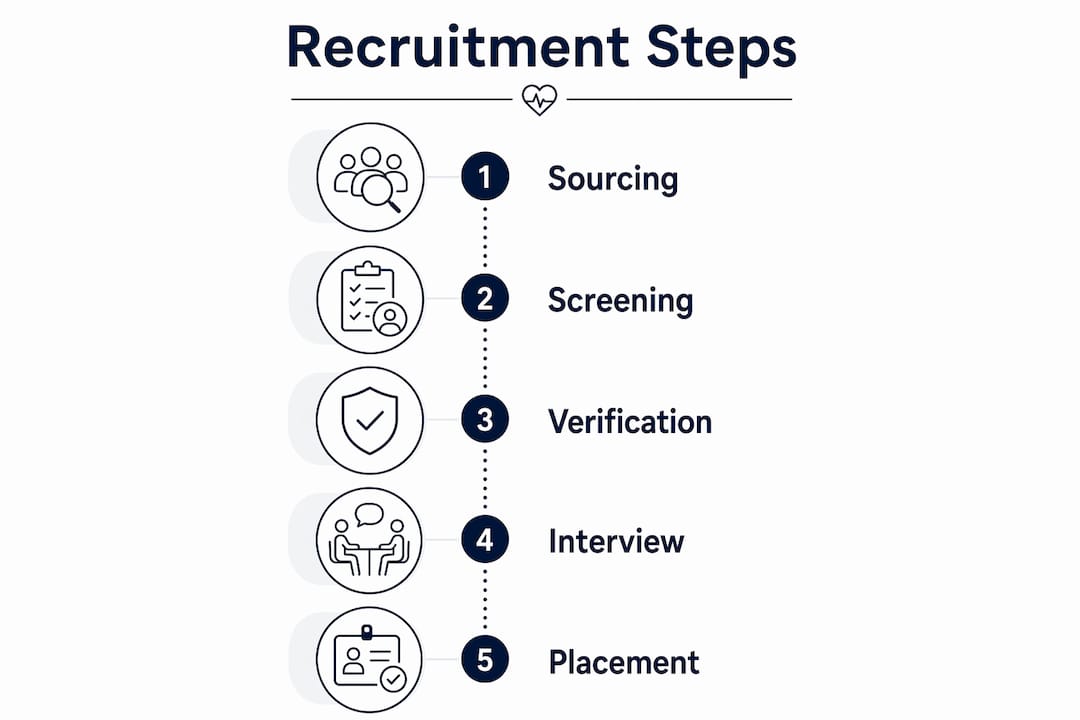
What steps are involved in the travel nursing recruitment process?
The travel nursing recruitment process follows a clear sequence, and knowing each step helps you move through it faster.
-
Candidate outreach. Recruiters build their pipelines through databases, social media, and professional networks. Top recruiters source 40 or more qualified candidates weekly through active searches rather than waiting for applications to arrive.
-
Resume and credential screening. Recruiters review clinical backgrounds and match nurses to open requisitions based on specialty, experience, and availability. Resumes that include specific clinical keywords, such as "titrating high-risk meds," rank higher in ATS screening systems used by most agencies.
-
Licensing and compliance coordination. Multi-state licensing through the Nurse Licensure Compact (NLC) is a major administrative task. Recruiters track license status, gather compliance documents, and flag any gaps before submitting a candidate to a facility.
-
Interview scheduling and facility communication. Once a candidate clears screening, the recruiter coordinates interviews and manages all communication between the nurse and the hiring team.
-
Offer negotiation and placement follow-up. Recruiters negotiate contract details including pay rate, housing stipends, and travel reimbursements. Travel nursing assignments typically last 8–13 weeks, and recruiters stay engaged throughout to support renewal or transition to the next assignment.
Pro Tip: Have your compliance documents, references, and license copies ready before your first recruiter call. Candidates who arrive prepared move to placement significantly faster than those who gather documents after an offer arrives.
How do recruiters handle high-volume, fast-paced hiring?
Travel nurse recruiters operate under constant pressure. Managing 30–50 open requisitions at once means every recruiter must prioritize candidates who are ready to move quickly. Understanding how they manage that workload helps you position yourself as a top candidate.
- Applicant tracking systems (ATS) rank and sort candidates automatically. Nurses whose profiles match clinical keywords get surfaced first. Keeping your profile current and keyword-rich is not optional. It is the baseline for visibility.
- Rapid response windows are real. When a recruiter reaches out, a same-day reply often determines whether you get submitted for a role before it fills. Recruitment timelines can span days to weeks, and the difference often comes down to candidate responsiveness.
- Compliance readiness separates fast placements from slow ones. Recruiters prioritize candidates who hold multiple state licenses and have complete paperwork ready, because those nurses reduce administrative burden on both sides.
- Delays are often facility-driven. Hospital internal approval processes, budget cycles, and credentialing committees create slowdowns that have nothing to do with your recruiter. Hiring delays in healthcare are common and well-documented.
- Workflow management tools help recruiters track every candidate across multiple stages. Nurses who communicate proactively, update their availability, and confirm interest quickly stay at the top of those pipelines.
Pro Tip: If you have not heard back within a week of submitting documents, send a brief check-in message. Recruiters manage large pipelines and a short, professional follow-up keeps you visible without being intrusive.
What skills make travel nurse recruiters effective?
Effective travel nurse recruiters combine clinical knowledge with sales ability and compliance expertise. That combination is rarer than it sounds, and it directly affects the quality of your placement experience.
- Clinical fluency. Recruiters who understand nursing specialties, scope-of-practice differences, and licensure requirements can match candidates accurately. A recruiter who cannot distinguish between a PACU nurse and a step-down nurse will submit you to the wrong roles.
- Sales and relationship skills. Recruiting is fundamentally a sales role. Recruiters sell candidates to hiring managers and sell opportunities to nurses. The best ones do this through honest representation, not pressure tactics.
- Credentialing and compliance expertise. Knowing the NLC compact states, Joint Commission standards, and facility-specific credentialing requirements is non-negotiable. A recruiter who misses a licensing gap can delay your start date by weeks.
- Transparent communication. Recruiters who set clear expectations about timelines, pay ranges, and facility culture reduce the frustration that comes from mismatched placements. Honest communication builds the kind of trust that leads to long-term working relationships.
- Multi-tasking across requisitions. The role blends relationship-building with sales skills, clinical knowledge with HR expertise, requiring recruiters to manage numerous active candidates without losing focus on any individual nurse's needs.
How does the recruiter-nurse relationship support career growth?
A strong recruiter-nurse relationship goes well beyond a single placement. Recruiters who know your specialty, your preferred locations, and your scheduling needs become genuine career partners over time.
- Recurring assignments. Strong recruiter-candidate relationships lead to higher candidate loyalty and repeat placements. A recruiter who has placed you successfully once will prioritize you for the next opening that fits your profile.
- Pay and housing negotiations. Recruiters manage pay packages, housing stipends, and travel reimbursements on your behalf. Nurses who communicate their priorities clearly get better outcomes because recruiters can advocate more effectively with specific numbers and preferences in hand.
- Flexible scheduling support. Recruiters who understand your availability can match you to travel nursing assignments that fit your life, not just the facility's calendar.
- Career guidance across specialties. Experienced recruiters track market demand across specialties and can advise you on which certifications or licenses will open the most opportunities in the next assignment cycle.
- Proactive engagement pays off. Nurses who check in between assignments, update their availability, and share feedback from completed contracts give their recruiters the information needed to find better fits faster.
The recruiter relationship works best when both sides treat it as a partnership. You bring clinical skill and reliability. Your recruiter brings market access and administrative support. That exchange, when it functions well, produces placements that benefit both the nurse and the facility.
Key Takeaways
A travel nurse recruiter is the single most important professional relationship you can build in travel nursing, because they control access to assignments, manage compliance, and negotiate your pay.
| Point | Details |
|---|---|
| Recruiter workload is high | Recruiters manage 30–50 requisitions at once, so fast responses from nurses directly improve placement speed. |
| Compliance readiness wins | Having licenses and paperwork ready before outreach reduces your time to placement significantly. |
| ATS keywords matter | Clinical-specific resume language gets you past automated screening before a recruiter ever reads your profile. |
| Delays are often facility-side | Hospital internal processes cause most hiring slowdowns, not recruiter neglect. |
| Long-term relationships pay off | Nurses who build trust with recruiters get prioritized for recurring assignments and better contract terms. |
What I have learned from watching recruiters work
Working closely with travel nurse staffing has shown me one thing clearly: the nurses who treat their recruiter like a partner, rather than a vending machine, get better assignments. That sounds obvious, but most nurses approach their first recruiter call as a transaction. They want a job. The recruiter wants a placement. Both sides get what they need once, and then the relationship goes cold.
The nurses who thrive in travel nursing do something different. They call their recruiter between assignments. They share what worked and what did not at the last facility. They ask about market trends in their specialty. That kind of communication gives the recruiter real information to work with, and it signals that you are a reliable, long-term candidate worth prioritizing.
The other misconception I see constantly is that recruiter silence means neglect. It almost never does. Hospital hiring processes involve multiple internal approvals, credentialing committees, and budget sign-offs that have nothing to do with your recruiter's effort. The nurses who understand this stay patient and professional. The ones who do not burn bridges they will need later.
For new graduates entering travel nursing, my advice is simple. Get your compact license, prepare your compliance documents before you need them, and choose a recruiter who asks more questions than they answer in your first conversation. A recruiter who listens is one who will place you well.
— Flexible
Flexiblenursingcareers connects nurses with the right assignments
Flexiblenursingcareers was built to cut the friction out of travel nurse staffing. The platform matches nurses to positions based on real-time availability, specialty, and location preferences, so you spend less time waiting and more time working.

Whether you are looking for your first travel assignment or your tenth, the nursing jobs listings on Flexiblenursingcareers give you direct access to open positions across the country. The platform connects you with recruiters who specialize in your specialty area and can move quickly when the right role opens. Sign in or create your profile today to see what is available in your area.
FAQ
What does a travel nurse recruiter do day to day?
A travel nurse recruiter sources candidates, verifies credentials, coordinates multi-state licensing, schedules interviews, and negotiates contract terms. They also manage ongoing communication between nurses and healthcare facilities throughout an active assignment.
How many candidates does a travel nurse recruiter manage at once?
Recruiters typically manage 30–50 active requisitions simultaneously. That volume makes candidate responsiveness and compliance readiness the two biggest factors in placement speed.
Why do hiring delays happen in travel nurse staffing?
Most delays come from hospital-side processes, including credentialing committees, budget approvals, and internal sign-offs, not from recruiter inaction. Facility-driven hurdles are the most common source of slowdowns in the travel nursing recruitment process.
How do I choose a travel nurse recruiter?
Choose a recruiter who asks detailed questions about your specialty, preferred locations, and scheduling needs in the first conversation. Recruiters who listen before they pitch are more likely to match you to assignments that fit your actual career goals.
What can I do to get placed faster through a recruiter?
Hold a multi-state compact license, keep your compliance documents current, and respond to recruiter outreach the same day. Candidates with complete paperwork and active licenses move through the placement process significantly faster than those who gather documents after an offer arrives.