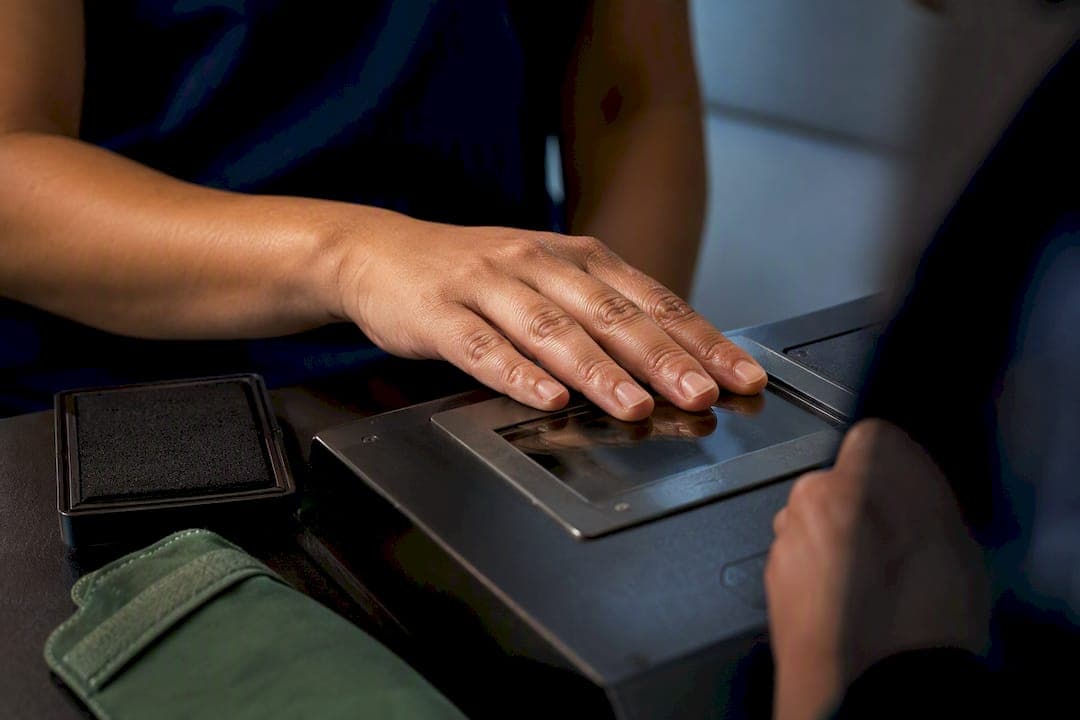
Yes, most state boards of nursing require a criminal background check before they'll issue or renew a license, and that check almost always includes fingerprinting. A background check nursing applicants complete typically covers identity verification, state and FBI criminal history, healthcare sanctions and exclusion screening, and license verification, with employers sometimes layering on drug tests. If something turns up, boards don't issue an automatic denial. They review the record against a set of standard factors, so applicants with a history should come prepared with documentation and a personal statement.
TL;DR:
- Most state boards require fingerprint-based background checks for licensure, endorsement, or renewal, and these are often specific to each state's process and vendor.
- Healthcare-specific searches include checks against federal and state exclusion lists, with FACIS Level 3 providing the most comprehensive professional discipline information.
- Common disqualifying offenses involve violence, sexual offenses, patient abuse, drug diversion, or fraud, but boards decide case-by-case based on offense seriousness, rehabilitation, and recency.
- Fingerprint results generally do not transfer between states, so applicants must often schedule new fingerprinting appointments when moving or applying in different jurisdictions.
- Applicants with criminal records should be transparent, proactively gather documentation, and carefully craft personal statements to improve chances of licensure approval.
Table of Contents
- What Does a Background Check for Nursing Jobs Include?
- Which States Require Fingerprinting for Nursing License Verification?
- What Offenses Commonly Trigger a Nursing License Denial?
- Board Checks vs. Employer Screening: Know Your FCRA Rights
- How to Handle a Nursing License Application With a Record
- How Long Does a Nursing Background Check Take?
- The Fingerprint Mistakes That Cost Applicants the Most Time
- An Applicant's Roadmap for Handling a Positive Background Result
- Where to Verify Nursing Background Check Requirements
- Sources
- FAQ
What Does a Background Check for Nursing Jobs Include?
A criminal background check for nurses goes well beyond what most industries run on new hires. Boards of nursing and healthcare employers both draw from the same core toolkit, but they combine the pieces differently depending on whether the goal is licensure or a specific job offer.
Identity verification and Social Security trace. This step confirms that the person applying is who they claim to be and that every other search in the check gets linked to the right individual's record. A mismatched name or an old address can cause a criminal history search to miss records or, worse, attach someone else's record to your file.
State criminal history vs. FBI check. A state-level check searches records held by that state's law enforcement agencies. It won't surface an arrest or conviction from a different state. That's why most boards pair it with an FBI fingerprint-based check, which searches the national database and catches out-of-state history a state-only search would miss.
Healthcare sanctions and exclusion checks. This is where nursing screening diverges sharply from a standard employment background check. Employers and boards check the OIG List of Excluded Individuals and Entities (LEIE) and the System for Award Management (SAM) database to confirm an applicant hasn't been barred from federally funded healthcare programs. Facilities that bill Medicare or Medicaid face real financial exposure if they employ someone on either exclusion list.
Many healthcare employers rely on FACIS (Fraud and Abuse Control Information System) to run these exclusion searches in layers:
- FACIS Level 1 searches federal sources, primarily the OIG LEIE and SAM.
- FACIS Level 2 adds state Medicare and Medicaid exclusion databases on top of the federal lists.
- FACIS Level 3 adds state nursing board disciplinary actions and state abuse registries, which makes it the most likely tier to surface professional discipline or abuse findings.
License verification and disciplinary history. Employers and boards check Nursys or the relevant state database to confirm a license is active, unencumbered, and free of pending discipline. A lapsed license or an unreported disciplinary action from another state can stall an application even when the criminal history section comes back clean.
Additional employer screenings. Beyond the healthcare-specific pieces, many employers add a drug test, a sex-offender registry check, a motor vehicle record (relevant for home health or travel roles), and verification of your nursing education and prior employment.
Nursing background checks tend to run more thorough than a typical pre-employment screen precisely because of this stacking effect. Convictions can appear on a report indefinitely, while certain non-conviction records fall off after seven years under federal law, though some higher-salary positions are exempt from that limit. Keeping a copy of your own credential file, similar to the approach outlined in this healthcare credential checklist, makes it easier to catch and correct errors before they cost you a placement.
Which States Require Fingerprinting for Nursing License Verification?
Most state boards of nursing now require a fingerprint-based criminal background check for initial licensure, and a majority also require one for endorsement (transferring a license from another state), reinstatement, or renewal. Practices vary enough by state, though, that you should never assume your last state's process applies to your next one.
Fingerprint-based checks feed both a state repository search and a submission to the FBI, which is why they catch far more than a name-based search alone. Some boards run this in-house through a dedicated unit. Others outsource it entirely to an approved livescan vendor network, and a handful still accept ink-card fingerprinting mailed to a state police agency for older or rural applicants.
State board procedural pages are the definitive source here, and they're usually specific down to the vendor and code. Florida's health department, for example, publishes a step-by-step screening initiation portal that walks applicants through selecting the right screening type before booking an appointment. Every state runs a version of this page, and it's worth bookmarking before you start any application.
Here's a general snapshot of how the process tends to break down by category, though you should always confirm specifics against your own board's current instructions:
| Requirement type | Common approach | What to verify |
|---|---|---|
| Initial licensure | Fingerprint-based state and FBI check | Whether the board or a vendor collects prints |
| License endorsement (new state) | Usually a fresh fingerprint check | Fingerprint results rarely transfer between states |
| Renewal | Varies. Some states require periodic re-check | Whether your state uses rap-back instead |
| Reinstatement after lapse | Often requires a new CBC | Timelines can run longer than standard renewal |
How to actually get fingerprinted. Once you know your state's process, the appointment itself follows a predictable pattern:
- Confirm your board's required screening type and the specific service code tied to it before you book anything.
- Schedule with the board's in-house unit, a designated law enforcement office, or an approved livescan vendor. Most states now default to livescan.
- Bring government-issued photo ID and the confirmation number or authorization form your board requires.
- Have prints captured electronically (livescan) or on a paper card, depending on what your state accepts.
- Pay the fee at the appointment unless your board bills it separately through your license application.
- Save your transaction control number or receipt. You'll need it if you have to confirm transmission later.
Service codes matter more than most applicants realize. Livescan vendors route results based on the code you select at booking, and that code tells the system which agency should receive the results and for what purpose. Book the wrong code and your fingerprints may never reach the board of nursing at all, forcing you to redo the entire process and pay the fee twice.
Fees and payment. CBC fees typically fall between $30 and $75 depending on the state and collection method, and jurisdictions differ on whether the applicant pays directly or the fee gets folded into the licensing application cost. Some boards enroll nurses in rap-back programs, which retain fingerprints on file so the state can notify the board automatically if a licensed nurse is arrested later. If you're not sure whether your prints reached the board, most state portals let you check application status online, and it's worth confirming before you assume the step is complete.
What Offenses Commonly Trigger a Nursing License Denial?
No single list applies nationwide, but certain categories of offenses show up consistently across state board reviews as red flags: crimes involving violence, sexual offenses, patient abuse or neglect, drug diversion, and fraud or theft. Boards treat these categories seriously because they map directly onto the risks a nurse could pose to patients or to controlled substances in a clinical setting.
That said, a criminal record doesn't automatically mean denial. The National Council of State Boards of Nursing recommends that boards evaluate applicants with criminal histories case by case rather than applying blanket disqualification. The standard evaluative factors boards apply to include:
- How serious the offense was and whether it involved violence, dishonesty, or harm to a vulnerable person.
- How much time has passed since the offense, and whether that gap shows a pattern of stability.
- Whether the offense relates directly to nursing duties, such as drug diversion versus an unrelated traffic violation.
- Evidence of rehabilitation, including completed sentences, treatment programs, or community involvement.
- Whether the record reflects an isolated incident or a repeated pattern of similar conduct.
NCSBN also encourages boards to maintain a minor-offense list paired with an advanced-screening pathway, so low-level infractions don't automatically block licensure while serious or repeated offenses get deeper review. Some states publish explicit statutory lists of disqualifying crimes, while others rely entirely on board discretion applied through the factors above. Because this varies by jurisdiction, the practical move is always to check your specific state board's regulations rather than assume a rule from one state applies elsewhere.
Administrative sanctions show up differently than criminal convictions. A prior license suspension, revocation, or consent agreement in another state will surface through Nursys or a direct license verification search, not through the criminal fingerprint check. Boards weigh these records seriously, since they reflect professional judgment issues rather than a general criminal matter.
Pro Tip: If you're unsure whether an old charge counts as disqualifying, don't wait for the board to flag it. Contact the board directly, describe the situation factually, and ask how they typically handle that offense category. Most boards would rather answer a proactive question than process a denial.
Board Checks vs. Employer Screening: Know Your FCRA Rights
Board of nursing checks and employer background checks serve different purposes, even though they often pull from overlapping sources. A licensure check protects the public by confirming your fit to hold a nursing credential at all. An employer check evaluates hiring risk and regulatory compliance for one specific job, and it can consider factors a board wouldn't, like a candidate's driving record for a home visit role.
That distinction matters because different rules govern each process. When an employer uses a third-party consumer reporting agency to run your background check, the Fair Credit Reporting Act requires written disclosure and your written consent before the check happens. If something in the report might affect the hiring decision, the employer has to follow a specific sequence:
- Send a pre-adverse action notice along with a copy of the report and a summary of your rights.
- Give you a reasonable window to review the report and dispute anything inaccurate.
- Send a final adverse action notice only after that window closes, if the employer still intends to act on the report.
FCRA also limits how far back certain records can be reported. Convictions can appear indefinitely, but many non-conviction records and other adverse items are subject to a seven-year lookback limit, with exceptions for roles above a certain salary threshold. Some states layer additional restrictions on top of the federal floor, so a record that's reportable under FCRA might still be off-limits under state law.
If an employer tells you a background report affected their decision, request your own copy immediately. Review it line by line, and if anything is wrong, dispute it directly with the reporting agency in writing. Court documentation showing a dismissed charge or an expunged record can resolve a dispute quickly, which is one more reason to keep your own paperwork organized rather than scrambling for it after a job offer is on the line. Employers navigating their own compliance obligations can find more on structuring a screening program on NurseFlex Jobs' employer resources.
How to Handle a Nursing License Application With a Record
If you have a criminal record and you're applying for licensure, the worst move is silence. Boards consistently respond better to transparency paired with documentation than to an application that looks like it's hiding something. Here's the sequence that tends to produce the best outcomes.
- Pull your court documents first. Get certified copies of the disposition for every relevant case, including dismissals, expungements, or reduced charges. Boards want the official record, not your recollection of what happened.
- Gather proof of completion. If you finished probation, a diversion program, community service, or restitution, get certificates or letters confirming completion. These documents carry real weight in a board's rehabilitation assessment.
- Collect letters of support. Letters from employers, instructors, or supervisors who can speak to your conduct since the offense help boards see a pattern of stability rather than a single data point.
- Write your personal statement. NCSBN guidelines call for applicants to provide the dates, circumstances, court findings, and current status of the matter. Keep it factual and specific. State what happened, when, what the court decided, and what's changed since. Avoid minimizing the offense, but don't over-apologize either. Boards are assessing risk, not sincerity alone.
- Prepare for a possible evaluation request. Some boards, particularly for offenses involving substance use or mental health concerns, will request a psychological or substance-use evaluation before making a decision. Ask the board for a list of qualified evaluators in your state rather than choosing one blind, since boards sometimes have preferred criteria for who conducts these assessments.
- Know your appeal options if denied. Most states offer a formal appeal or reconsideration process, and some allow a waiver request even when a statute technically lists an offense as disqualifying. Timelines and fees for appeals vary by state, and reinstatement after a lapse often follows a similar documentation-heavy path, detailed further in this state-by-state reinstatement guide.
One detail that surprises a lot of applicants: rap-back enrollment means your fingerprints stay on file with the state, and any new arrest can trigger an automatic notification to the board, even years after your original CBC. That's a feature worth understanding rather than fearing. It means a clean record after licensure generally stays invisible to the board unless something new happens.
Pro Tip: Draft your personal statement before you need it. If you know a background check is coming and you have a record, writing the statement while details are fresh and unemotional produces a stronger document than writing it under deadline pressure after a board request.
How Long Does a Nursing Background Check Take?
Timelines vary by state and by how the fingerprints are processed, but most straightforward checks resolve within a few weeks. State-only searches often return faster than the combined state and FBI submission, since the FBI portion depends on national database processing capacity.
Costs stay fairly consistent nationally. CBC fees generally run $30 to $75, and whether you pay that directly or it's bundled into your licensing fee depends entirely on your state's process. Some boards bill it separately at the fingerprinting appointment. Others fold it into the application fee you already paid.
Delays almost always trace back to a handful of preventable causes:
- Booking the wrong livescan or service code, which routes results away from the board entirely.
- Submitting an incomplete application form alongside the fingerprint order.
- Court record retrieval taking longer than expected, especially for older cases or out-of-state courts.
- Name or address mismatches between your ID and your application, which can stall identity verification.
Quick pre-appointment checklist: confirm your exact service code with the board (not just the vendor), bring valid photo ID, have your application confirmation number ready, and double-check that your legal name matches your ID exactly before you show up. That five-minute check at home can save weeks of resubmission later.
The Fingerprint Mistakes That Cost Applicants the Most Time
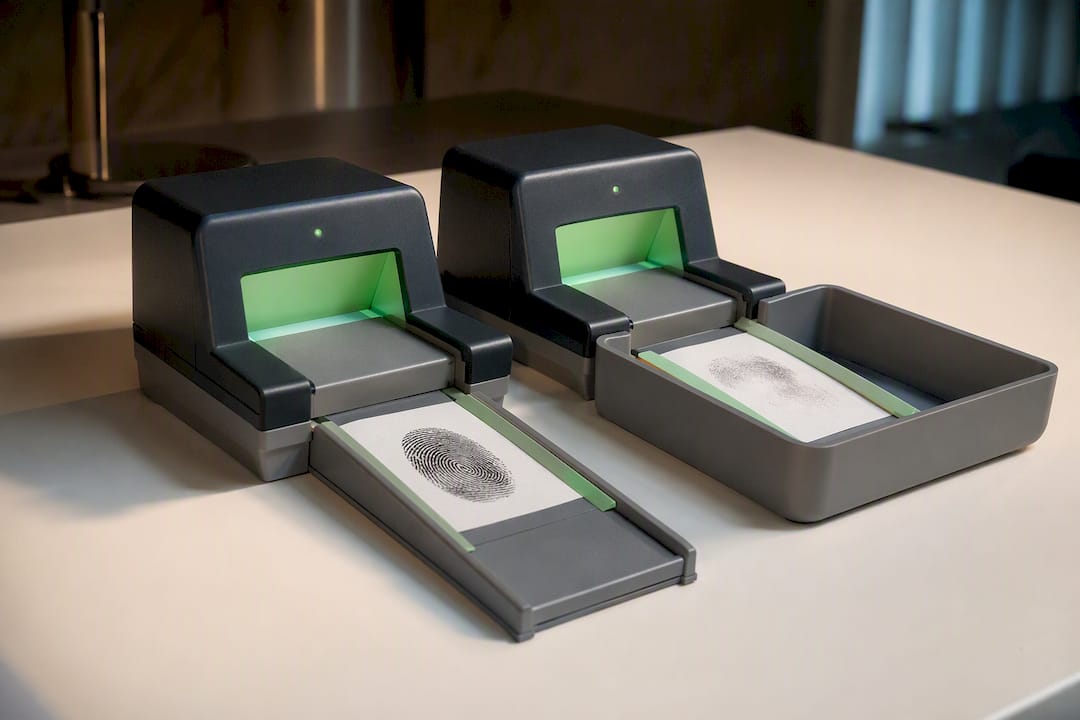
Fingerprints don't travel with you the way many applicants assume. Most states require a brand-new fingerprint-based background check when you apply in a different jurisdiction, even if you passed a CBC in your original licensing state months earlier. If you're planning to work across state lines through a multistate license or a new endorsement application, budget time and fee money for a repeat fingerprinting appointment.
The service code mistake deserves its own warning because it's so common and so avoidable. Livescan vendors process fingerprints for dozens of purposes, from teaching licenses to firearm permits, and the code you select determines which agency receives your results. Choosing the wrong code often means your fingerprints get processed and filed correctly, just for the wrong recipient, so nothing routes to the board of nursing at all. You won't necessarily find out until your application stalls weeks later.
- Always confirm your service code directly with the board of nursing's application instructions, not just what a vendor's booking page suggests.
- After your appointment, check your board's online application portal for confirmation that fingerprints were received, rather than assuming silence means success.
- If a transmission fails, contact the board immediately. Most can tell you whether the issue is on the vendor's end or the board's end, which determines whether you need to resubmit.
- Ask whether your state uses rap-back retention. If it does, your prints stay on file, which can simplify future renewals but also means new arrests get flagged automatically.
Pro Tip: Take a screenshot or save a PDF of your fingerprinting confirmation and service code selection at the time of your appointment. If something goes wrong weeks later, having that record on hand speeds up troubleshooting significantly.
An Applicant's Roadmap for Handling a Positive Background Result
If your background check comes back with something on it, the first 48 hours matter more than people think. Pull your court disposition documents immediately, even before the board contacts you. Reach out to the board directly rather than waiting for a form letter, and ask what they need from you. Start drafting an honest personal statement while the facts are still clear in your head, and begin collecting evidence of rehabilitation, whether that's a completion certificate, a supervisor letter, or documentation of treatment completed.
The applicants who navigate this well share one trait: they treat the process as transparent cooperation, not damage control. Boards are trained to spot evasiveness, and it rarely helps. Following the board's instructions precisely, submitting complete documentation the first time, and answering follow-up requests promptly will move your case forward faster than any amount of persuasive writing.
Once your credential status is settled, one thing worth knowing is that not every nursing role weighs a record the same way. Some staffing platforms work with healthcare employers filling flexible and specialized roles, and matching to the right employer and role context can matter as much as the credential itself.
— Flexible
Where to Verify Nursing Background Check Requirements
Generic explainers can only take you so far. The organizations that actually set and enforce these standards publish their own guidance, and it's worth reading directly rather than relying on secondhand summaries.
- NCSBN's Criminal Background Check Guidelines lay out the evaluative framework boards use for applicants with criminal histories, including the personal statement and risk-assessment approach referenced throughout this guide.
- NCSBN's CBC FAQ document answers practical questions about fees, processing, and how fingerprint checks apply across licensure, endorsement, and renewal.
- The OIG List of Excluded Individuals and Entities and the System for Award Management are the two federal exclusion databases that determine whether an applicant is barred from federally funded healthcare programs, both referenced in FACIS-level screenings.
- Your specific state board of nursing's website is the only reliable source for the exact livescan vendor, service code, and fee your application requires. Florida's background screening portal is a useful example of how detailed these instructions can get.
Bookmark your own state board's page before you start any application. Instructions change, vendors get swapped, and codes get updated, so the page you read last year may not reflect this year's process.
This article is general information, not a substitute for advice from a qualified lawyer. Consult a qualified legal professional about your own circumstances before acting on anything here.
Sources
- Criminal Background Check (CBC) Guidelines | NCSBN
- Criminal Background Checks (CBCs) for Nurse Licensure: Frequently Asked Questions (FAQs) | NCSBN
- Nursing Background Check Requirements: What Disqualifies You From Nursing | GoodHire
- Consumer Rights summary (CFPB) | consumerfinance.gov
FAQ
What Kind of Background Checks Do Nurses Have to Pass?
Most nurses complete a fingerprint-based state and FBI criminal history check, a healthcare sanctions and exclusion check against the OIG LEIE and SAM databases, and license verification. Employers often add a drug screen and additional checks specific to the role.
What Disqualifies You From Being a Nurse?
There's no single nationwide disqualifying list. Boards commonly scrutinize violent crimes, sexual offenses, patient abuse or neglect, drug diversion, and fraud, but most evaluate applicants case by case rather than applying an automatic ban.
What Criminal Background Checks Disqualify a Nurse?
A criminal record alone rarely triggers automatic disqualification. Boards weigh the offense's seriousness, how much time has passed, its relationship to nursing duties, and evidence of rehabilitation before deciding.
What Disqualifies You From Working in Healthcare for a Background Check?
Being listed on the OIG List of Excluded Individuals and Entities or the System for Award Management exclusion list typically disqualifies someone from roles at facilities that bill Medicare or Medicaid. Serious criminal convictions tied to patient safety, such as abuse or drug diversion, also weigh heavily in employer and board decisions.
Do Fingerprint Results Transfer Between States?
Generally, no. Most state boards require a fresh fingerprint-based background check when you apply for licensure or endorsement in a new state, even if you passed a check elsewhere recently.