
Four states legally require specific nurse-to-patient ratios: California, Oregon, Massachusetts, and New York. Each law covers different units and enforces compliance differently. Most other states take a different approach entirely.
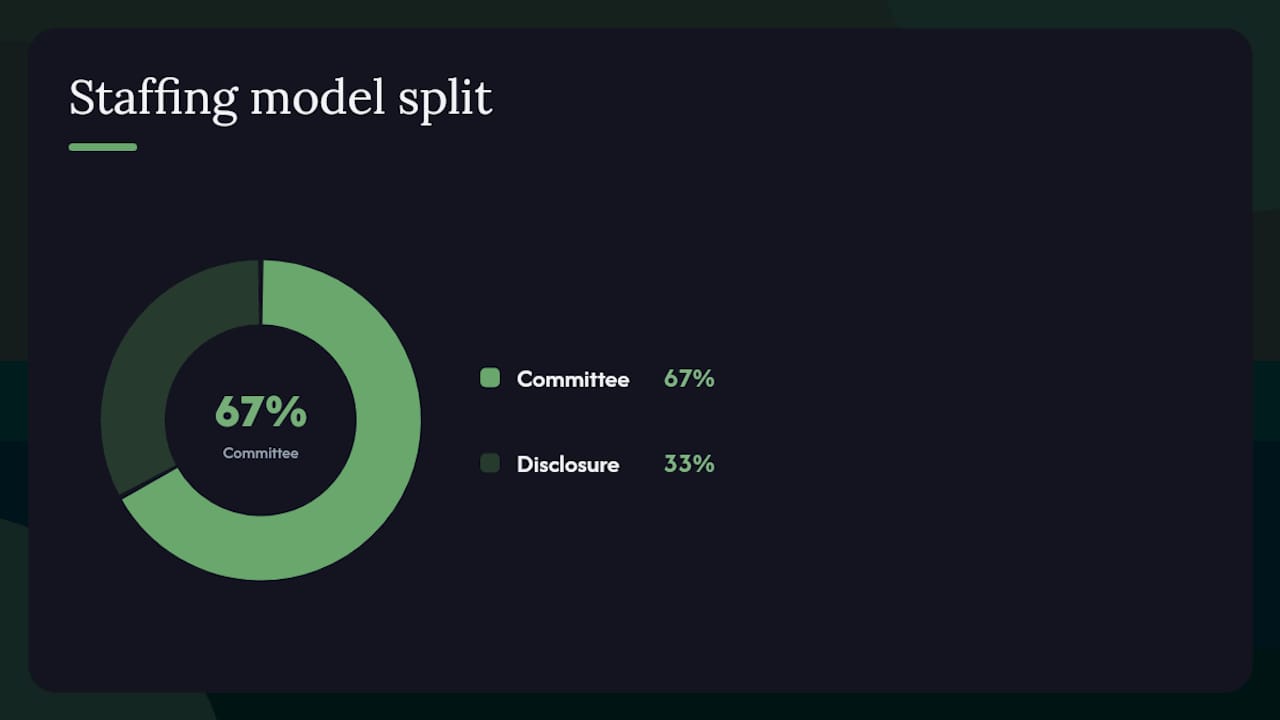
The bulk of the country relies on nurse staffing committees or public disclosure laws instead of hard numbers. A smaller group has no statutory staffing requirement at all. Federal law does not mandate hospital ratios anywhere in the United States. The Centers for Medicare & Medicaid Services (CMS) has focused its 2023 and 2024 staffing rulemaking on nursing homes and long-term care, not acute-care hospitals.
Here's the tiered breakdown you're likely searching for:
- Mandatory numeric ratios: California, Oregon, Massachusetts (ICU/burn units only), New York (critical care)
- Staffing committees or disclosure laws: Connecticut, Illinois, Nevada, Ohio, Texas, Washington, New Jersey, Rhode Island, Vermont, and roughly two dozen others
- No statutory staffing requirement: the remaining states, where hospital staffing is set internally with no legal floor
Key Takeaways
Nurse staffing ratios by state split into three enforcement tiers, and only California, Oregon, Massachusetts, and New York carry statutory numeric mandates as of 2026.
| Point | Details |
|---|---|
| Four states mandate ratios | California, Oregon, Massachusetts, and New York set legal numeric floors, though scope varies by unit. |
| Most states use committees | Nurse-led staffing committees draft plans based on acuity rather than fixed numbers. |
| No federal hospital mandate | CMS staffing rules target nursing homes; hospital ratios remain a state-by-state issue. |
| Verify with primary sources | Pull statute text and staffing plans directly rather than relying on secondhand summaries. |
| Flexible staffing supplements compliance | Rapid matching covers short-term gaps but never replaces the legal staffing floor. |
Table of Contents
- Nurse Staffing Ratios By State: The Three-Tier Breakdown
- What Are the Exact Ratios in California, Oregon, Massachusetts, and New York?
- How Do Committee and Disclosure States Handle Staffing?
- Does Federal Law Require Any Nurse Staffing Ratios?
- How Do You Verify Your Hospital's Staffing Requirements?
- Can Flexible Staffing Help Hospitals Meet Legal Ratios?
- Why State Ratio Laws Still Fall Short of What Nurses Need
- Nurse Staffing Ratios: What the Data Actually Tells Us
- Sources
Nurse Staffing Ratios By State: The Three-Tier Breakdown
State nurse staffing regulations split into three distinct enforcement models, and knowing which one governs your facility changes how you push for change. A numeric mandate gives you a hard number to cite in a grievance. A committee model gives you a seat at the table but no guaranteed floor. No law means your only leverage is internal policy and public pressure.
| Tier | States (illustrative) | What it means in practice |
|---|---|---|
| Mandated numeric ratios | California, Oregon, Massachusetts, New York | Fixed nurse-to-patient limits by unit, backed by statute and regulatory enforcement |
| Staffing committee or disclosure laws | Connecticut, Illinois, Nevada, Ohio, Texas, Washington, New Jersey, Rhode Island, Vermont | Nurse-led committees set plans, or hospitals must publicly post staffing levels |
| No statutory ratio law | Most remaining states | Staffing levels set by hospital policy alone, with no state numeric or committee mandate |
A few notes worth flagging before you assume your state fits neatly into one box:
- Massachusetts and New York's mandates apply only to specific units, not hospital-wide, so a facility can be compliant in the ICU and unregulated everywhere else.
- Several committee states, including Washington, layer public reporting requirements on top of the committee model, which blurs the line between tiers.
- Ratio numbers, unit scope, and effective dates change through legislative sessions, so always confirm details against your state department of health or the actual statute text rather than a secondhand summary.
What Are the Exact Ratios in California, Oregon, Massachusetts, and New York?
California set the national template, and its numbers still anchor most 2023 nurse staffing requirements conversations today. Under 22 CCR 70217, hospitals must maintain fixed unit ratios: ICU at 1:2, medical-surgical units at 1:5, and emergency departments at 1:4. The California Department of Public Health enforces these floors, and under AB-1063, the department must now submit annual enforcement reports to the Legislature starting in 2025, along with public hearings on complaints and outcomes.

Oregon followed with HB 2697, a phased law rather than a single effective date. Certified nursing assistant caps are built into the statute alongside the nurse ratios, and medical-surgical units tighten to 1:4 in June 2026. The Oregon Health Authority holds enforcement authority, with financial penalties tied to documented violations.
Statistic Callout: California and Oregon are currently the only two states with broad, hospital-wide numeric mandates covering multiple unit types, according to Nevada State University's nursing program analysis.
Massachusetts and New York took a narrower path:
- Massachusetts limits its mandate to ICU and burn units only, leaving med-surg and ED staffing to hospital discretion.
- New York's Safe Staffing for Quality Care Act sets critical care ratios but does not extend statewide to every unit type.
If you work outside ICU or critical care in either state, the numeric mandate simply doesn't apply to your unit.
How Do Committee and Disclosure States Handle Staffing?
Most of the country skips fixed numbers in favor of a process. A staffing committee typically includes direct-care nurses who help draft a written staffing plan based on patient acuity, unit type, and skill mix, rather than a flat ratio applied everywhere. The American Nurses Association backs this model, arguing that committees adapt faster to real patient needs than a fixed number ever could.
The typical committee structure follows a pattern across states:
- The hospital forms a staffing committee, often required by statute to include a majority of direct-care nurses.
- The committee drafts and periodically revises a written staffing plan tied to acuity and skill mix.
- The plan gets filed with the state, posted publicly, or both, depending on the jurisdiction.
- Surveyors and regulators can request the plan and committee minutes during inspections or complaint investigations.
Connecticut, Illinois, Nevada, Ohio, Texas, and Washington all run some version of this committee model, while New Jersey, Rhode Island, and Vermont lean more heavily on public disclosure of staffing levels rather than committee governance.
Pro Tip: If your state uses a committee model, ask for the current staffing plan and the last two sets of committee minutes before you assume nothing is being tracked. That paper trail is often the strongest evidence you'll get.
Does Federal Law Require Any Nurse Staffing Ratios?
No federal law sets nurse-to-patient ratios for hospitals. The closest thing is the "adequate numbers" language in 42 CFR, which requires hospitals to staff sufficiently for patient needs without defining what sufficient means numerically, and separate rules cover critical access facilities.
CMS has instead concentrated its staffing rulemaking on nursing homes. Its 2023 proposal called for 0.55 registered nurse hours per resident day and 24/7 onsite RN coverage, a long-term care standard, not a hospital one. That distinction trips up a lot of advocates who assume federal action covers acute care.
Enforcement mechanisms vary sharply by tier:
- Mandated-ratio states: fines, mandatory reporting, and potential licensure action
- Committee states: plan review during state surveys and formal complaint investigations
- Accreditation bodies: the Joint Commission's staffing-related documentation expectations tied to its safety goals can carry accreditation risk independent of state law
How Do You Verify Your Hospital's Staffing Requirements?
Start with the primary source, not a summary article. State statutes and your state health department's website carry the actual legal text, including unit scope and effective dates that guides can miss or get outdated.
- Pull your state's statute or administrative code section directly from the department of health or legislature website.
- Request your hospital's current written staffing plan and the most recent staffing committee minutes.
- Collect shift rosters and patient assignment records covering the period you're concerned about.
Regulators and investigators generally accept staffing plans, committee minutes, assignment sheets, and patient census data as evidence. When you raise concerns with leadership, ask specifically: "What ratio or staffing plan governs this unit, and when was it last reviewed?"
Pro Tip: Public records requests for hospital staffing complaints are often faster through your state health department than through the hospital itself, especially in mandated-ratio states with annual reporting requirements.
Can Flexible Staffing Help Hospitals Meet Legal Ratios?
Flexiblenursingcareers connects hospitals to available nurses in real time, which can help cover the gap when a unit falls short of its required ratio during a call-out or census spike. That speed matters most in mandated-ratio states like California and Oregon, where an uncovered shift is a direct compliance risk, not just an inconvenience.
That said, flexible staffing supplements a compliance strategy. It doesn't replace one:
- Rapid matching helps fill vacancy gaps and surge demand without weeks of lead time.
- It works best as a bridge while permanent hiring or committee-driven staffing plans catch up.
- Facilities still carry the legal and contractual obligation to meet their state's actual ratio or committee-approved plan, regardless of how quickly a shift gets filled.
Why State Ratio Laws Still Fall Short of What Nurses Need
The mandated-ratio states get most of the attention, but they cover a small share of the country's hospital beds. That imbalance is the real story most coverage misses: California and Oregon prove ratios work operationally, yet 46 states still leave staffing to committee discretion or hospital policy alone.
Committee models sound reasonable in theory. In practice, a committee with weak enforcement teeth produces a staffing plan nobody outside the building ever reviews. The Washington State model, with its phased reporting and enforcement windows through 2028, shows the committee approach can have real accountability, but only when reporting deadlines and penalties are actually attached.
Rural facilities face a harder version of this problem. A committee model built for a 400-bed urban hospital doesn't translate cleanly to a 25-bed rural facility running lean on staff by necessity, not choice. If you're advocating for change, don't just ask whether your state has a ratio law. Ask whether your state's enforcement mechanism has teeth, and whether it accounts for facility size.
Prioritize getting your hands on the actual staffing plan and committee minutes before you assume the law protects you. In committee states, that paperwork is often the only enforcement mechanism that exists.
Nurse Staffing Ratios: What the Data Actually Tells Us
The gap between mandated-ratio states and everywhere else is the piece most coverage glosses over. Four states with hard numbers get cited constantly, but that leaves the vast majority of American nurses working under committee plans or no formal ratio protection at all, and that split matters more than any single state's exact numbers.
The conventional advice tells readers to "check your state's ratio law," as though every state has one. It doesn't. The more useful question is whether your state's enforcement mechanism, whatever form it takes, actually has consequences attached. A committee model with mandatory reporting and penalties functions differently than one that exists on paper only.
If you're an advocate or a working nurse trying to use this information, start with the enforcement mechanism, not the ratio number. Ask what happens when the plan isn't followed. That answer tells you more about your actual protection than whether your state's law uses the word "ratio" at all.
This article is general information, not a substitute for advice from a qualified doctor. Consult a qualified healthcare professional about your own circumstances before acting on anything here.
Sources
- Medicare & Medicaid programs: minimum staffing standards for long-term care facilities (CMS fact sheet)
- HB 2697 (Enrolled) — Oregon Legislature
- Advocating for safe staffing — American Nurses Association