What is nursing availability matching?
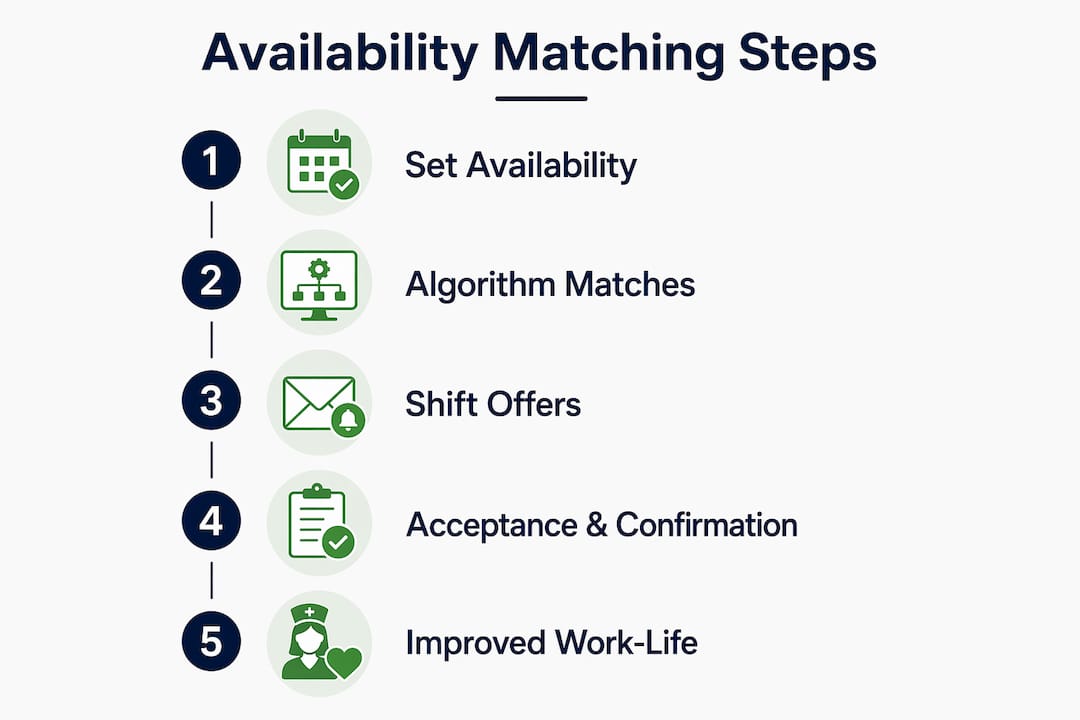
Nursing availability matching is the automated process of pairing qualified nurses with open shifts based on verified skills, certifications, personal availability, and legal eligibility. It replaces manual scheduling with real-time AI-driven logic that checks every relevant variable at once.
Here is what the process covers:
- Skills and certifications: The system confirms a nurse holds the required credentials for a specific unit, such as ICU or ED, before offering a shift.
- Real-time availability: Nurses submit their available windows; the system only surfaces shifts that fit.
- Legal compliance: Platforms run automatic exclusion screenings against sources like OIG LEIE and SAM.gov at registration, removing ineligible candidates before any match occurs.
- Regulatory alignment: Scheduling rules reflect labor standards, mandatory rest periods, and overtime thresholds.
- Bias reduction: Assignments follow transparent, rules-based logic rather than a manager's personal judgment.
The result is a fairer, faster process for nurses and a more reliable staffing pipeline for healthcare organizations.
Table of Contents
- How the technology behind shift matching actually works
- How availability matching improves your work-life balance
- Why healthcare organizations gain from availability matching
- NurseFlex Jobs: availability matching in practice
- How better scheduling connects to patient outcomes
- What the next wave of availability matching technology looks like
- Flexiblenursingcareers connects you to shifts that fit your life
- Key Takeaways
How the technology behind shift matching actually works
The core engine combines structured data with AI algorithms. When a shift opens, the platform cross-references nurse profiles against unit requirements, pulling in certification records, specialty designations, and stated availability in real time. Mobile apps then push shift offers directly to eligible nurses, cutting out the phone-tree coordination that once consumed hours of a charge nurse's day.
Key technical inputs include:
- Nurse certification and license status
- Specialty unit qualifications (ICU, ED, NICU, OR)
- Submitted availability windows and preferred shift types
- Compliance screening results from federal exclusion databases
- Fatigue and rest-period rules to prevent unsafe consecutive shifts
Algorithmic equity is built into the rules layer. Fairness audits replace experience-based bias, and the system applies the same criteria to every nurse on every shift. Platforms that also explain why a shift was or was not offered see higher adoption rates and fewer disputes, according to research on explainable AI in scheduling.
Pro Tip: When evaluating any availability matching platform, ask whether nurses can see the reason a shift offer was declined. Explainability is the single feature most tied to nurse trust and long-term adoption.
The role of availability data in producing accurate matches cannot be overstated. Garbage-in, garbage-out applies here: platforms that make it easy for nurses to update their availability in real time produce far better match quality than those relying on static, monthly submissions.

How availability matching improves your work-life balance
Fair scheduling is not just an operational goal. For nurses, it directly affects health, rest, and the decision to stay in a role.
- Preference alignment: You submit the shifts you want; the system prioritizes those first before offering alternatives.
- Reduced unsocial hours: Scheduling software that incorporates nurse preferences decreases unsocial shifts and increases rest intervals between assignments.
- Bias-free allocation: AI acting as a neutral arbiter removes the favoritism that erodes trust when a manager manually assigns weekend shifts.
- Transparency: When you can see why you received or missed a shift, the emotional friction of scheduling disputes drops significantly.
Platforms that align scheduling with nurse preferences have seen up to a 12% increase in nurse satisfaction attributable directly to fair, preference-aligned scheduling. That figure matters because satisfaction is one of the strongest predictors of retention.
Understanding real-time job matching benefits helps you see how these systems translate preference data into concrete scheduling outcomes.
Why healthcare organizations gain from availability matching
The operational case is straightforward. Automated matching fills open shifts faster, cuts the administrative load on nurse managers, and reduces the errors that come with manual coordination.
Key organizational advantages:
- Time savings: A ROTA automated scheduling system saved 78% of nurse scheduling time and achieved a 3% cost reduction at a tertiary hospital.
- Lower overtime costs: Matching nurses to shifts within their available hours reduces unplanned overtime.
- Reduced turnover: Equitable scheduling supported by transparent rules improves retention, lowering the cost of replacing experienced staff.
- Conflict reduction: Neutral AI scheduling reduces interpersonal friction by removing the perception that assignments reflect personal favoritism.
- Centralized visibility: Managers see staffing gaps across units in real time, enabling proactive rather than reactive coverage decisions.
Smart scheduling for support workers in adjacent healthcare sectors shows the same pattern: when scheduling is transparent and preference-aware, retention improves and last-minute scrambles decrease.
NurseFlex Jobs: availability matching in practice
NurseFlex Jobs, the platform behind Flexiblenursingcareers, applies real-time AI matching to connect nurses with flexible shifts that fit their verified skills and stated availability. The platform integrates credential verification, compliance screening, and shift notifications into a single workflow, so nurses move from registration to placement without the delays typical of traditional recruitment.
| Feature | What it does |
|---|---|
| Real-time shift matching | Surfaces open shifts the moment they match a nurse's profile |
| Credential verification | Confirms certifications and specialty qualifications before any offer |
| Compliance screening | Checks federal exclusion databases at registration |
| Mobile notifications | Alerts nurses to matching shifts instantly via app |
| Preference-based filtering | Prioritizes shifts aligned with submitted availability windows |
Best practices from the NurseFlex Jobs deployment:
- Keep nurse profiles updated with current certifications to avoid missed matches.
- Use the preference settings to block shift types that conflict with personal commitments.
- Review the reason for any declined match to understand how the algorithm prioritized other candidates.
On privacy and data security: the platform stores credential and availability data under standard healthcare data protection practices. Nurses control what they share, and compliance data is used solely for eligibility screening, not shared with third parties.
How better scheduling connects to patient outcomes
Staffing gaps do not stay administrative problems for long. When units run short, nurses carry heavier patient loads, response times lengthen, and the risk of adverse events rises. Availability matching addresses this directly by improving nurse allocation across units, identifying shortages before a shift starts rather than after it has already begun.
The American Nurses Association frames workforce management as matching staff competencies and skills to patient needs at the unit level. Availability matching automates that matching logic, so the right nurse reaches the right unit consistently. Fewer last-minute scrambles mean nurses arrive prepared rather than pulled from unfamiliar settings, which directly supports care continuity and patient safety.
What the next wave of availability matching technology looks like
The systems in use today are already sophisticated, but several developments are shaping what comes next.
Predictive demand modeling is moving from reactive to anticipatory. Instead of filling shifts after they open, platforms will forecast staffing needs based on patient census trends, seasonal admission patterns, and historical unit data, then proactively recruit availability before gaps form.
Deeper integration with credentialing and payroll systems will close the operational silos that still exist in many hospitals. As one workforce optimization analysis notes, standalone scheduling apps that lack credentialing and payroll connections create manual bottlenecks that undercut the efficiency gains matching delivers. Full integration is where the real productivity gains live.
Skills-based matching is also growing more granular. Platforms are beginning to distinguish not just between specialty units but between specific procedural competencies, enabling skills-based job matching at a level of precision that reduces mismatches even within the same unit type.
Flexiblenursingcareers connects you to shifts that fit your life
Nurses who want flexible work without the friction of traditional job boards get a direct path through Flexiblenursingcareers. The platform matches your verified credentials and availability to open shifts in real time, so you spend less time applying and more time working shifts that actually suit your schedule.

Flexiblenursingcareers eliminates the back-and-forth of manual recruitment. You set your availability, the platform handles the matching, and shift offers come to you. Healthcare employers on the platform gain the same speed advantage: open shifts fill faster, compliance is verified automatically, and the administrative burden on scheduling staff drops. Browse available nursing jobs now and see which shifts match your profile today.
Key Takeaways
Nursing availability matching works because it replaces manual, bias-prone scheduling with transparent AI logic that aligns nurse credentials, preferences, and compliance status with open shifts in real time.
| Point | Details |
|---|---|
| Core definition | Availability matching pairs nurses with shifts using verified skills, certifications, availability, and legal eligibility checks. |
| Nurse benefit | Preference-aligned scheduling reduces unsocial hours and has been linked to up to a 12% increase in nurse satisfaction. |
| Organizational gain | Automated scheduling saved 78% of scheduling time and achieved a 3% cost reduction in a tertiary hospital study. |
| Patient care link | Accurate nurse-to-unit matching reduces staffing gaps, supporting care continuity and patient safety. |
| Flexiblenursingcareers | The platform applies real-time AI matching to connect nurses with flexible shifts that fit their credentials and availability. |