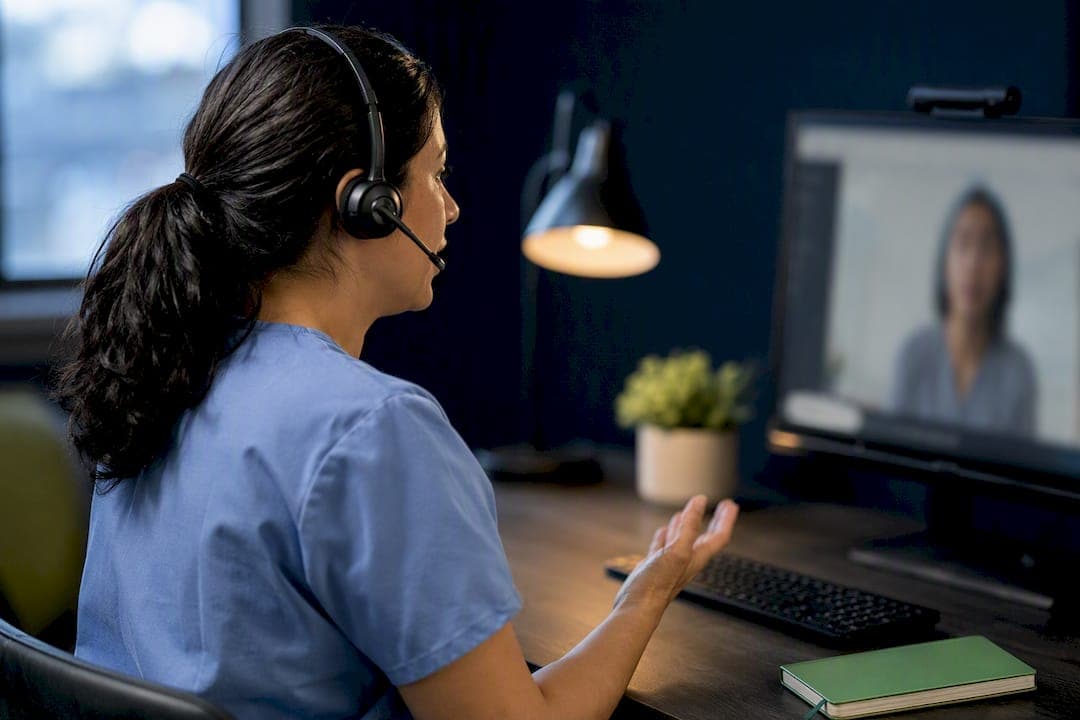
Yes, licensed RNs can practice telehealth in the U.S., but the rule that controls everything is patient location: you must hold an active license valid in the state where your patient physically sits during the visit. Beyond that, you need HIPAA-compliant technology, solid clinical experience, and documentation habits that match in-person standards. No universal telehealth license exists.
TL;DR:
- Telehealth nurses must hold an active license valid in the patient's state during the virtual visit, not just their home or employer’s location.
- Nurse Licensure Compact participation allows practice across multiple states without extra licenses, but nurses must verify patient location and license coverage before each shift.
- Certification like the ANCC Ambulatory Care credential is preferred but not mandated, with practical experience in remote visits often fulfilling practice hour requirements.
- Compliance depends on using HIPAA-approved technology, documenting patient consent, and having a clear escalation plan to ensure legal and safety standards are met.
- Building detailed documentation of remote hours and verifying licensure status is more critical than pursuing telehealth-specific certificates for career advancement.
Table of Contents
- Telehealth Nursing Requirements at a Glance
- Licensure and Jurisdiction: Where Your License Actually Applies
- Certification vs. What Employers Actually Ask For
- Privacy, Consent, and Technology Rules You Cannot Skip
- The Skills and Training Frameworks Employers Actually Look For
- How to Prove You're Ready for a Telehealth Role
- Where to Verify Current Rules and Requirements
- Why the Certification Question Distracts From What Actually Matters
- Find Telehealth Roles That Match Your License and Experience
- Sources
- FAQ
Telehealth Nursing Requirements at a Glance
Before you apply for a remote role or accept a telehealth assignment, run through this checklist. It covers the licensure basics, the technology expectations, and the paperwork habits that keep you compliant.
- Active RN license: Valid and unencumbered in the state where your patient is physically located at the time of the visit, not just where you live or work.
- Nurse Licensure Compact (NLC) coverage: If your home state participates in the Nurse Licensure Compact, your license may extend across other member states without extra paperwork. Check the current participation list before assuming coverage.
- Clinical experience: Most employers want some years of direct patient care experience, often in triage, outpatient, or care coordination settings, according to Sermo's telehealth nursing resources.
- Technology proficiency: Comfort with EHR platforms, video conferencing tools, and remote patient monitoring devices.
- HIPAA-compliant tools: Video and messaging platforms that meet privacy standards, with a business associate agreement in place where your employer requires one.
- Consent documentation: A clear, recorded process for capturing patient consent before every virtual encounter.
Every item on that list ties back to one principle: telehealth does not lower the bar. State boards apply the same standard of care to a video visit that they apply to a bedside conversation.
Licensure and Jurisdiction: Where Your License Actually Applies
The single rule that governs telehealth nursing is this: your license must be valid in the state where your patient is physically located when care is delivered, not where you are sitting, and not where your employer is headquartered. State boards of nursing enforce this standard, and they can discipline a nurse for practicing across state lines without proper authorization, according to HHS guidance on licensing across state lines.
Here's how that plays out in practice:
- Confirm your home state license status. It must be active, unencumbered, and in good standing.
- Check whether your state participates in the NLC. A multistate license lets you practice in any other compact member state without applying for a separate license there. Not every state has joined, and some have enacted the compact but not yet implemented it operationally.
- Verify the patient's actual location for every encounter, not just their mailing address on file. A patient traveling out of state during a scheduled visit can put you outside your license's coverage.
- Apply for additional state licenses when your employer's patient panel includes non-compact states. Some telehealth employers require nurses to hold licenses in every state they serve.
- Recheck compact status periodically. State participation changes as legislatures pass or enact new agreements.
One distinction trips up a lot of nurses moving into telehealth: the RN Nurse Licensure Compact and the APRN Compact are not the same thing, and they don't move at the same pace. RN compact licensure is broadly operational across member states. APRN compact status remains far more limited, so a nurse practitioner planning a multistate telehealth caseload needs to verify APRN-specific compact activation separately, a nuance covered in more detail in NurseFlex's guide to telehealth nurse practitioner licensure.
The practical takeaway: build a habit of checking patient-state coverage before, not during, a shift. A quick licensure verification takes minutes. Practicing outside your scope, even accidentally, exposes you to board discipline that can follow you for years.
Certification vs. What Employers Actually Ask For
There's no national or state law requiring a dedicated telehealth certification to practice remotely. Telehealth certification programs exist, but they function as employer-preferred credentials rather than legal mandates, a distinction confirmed in peer-reviewed research on telehealth policy for advanced practice nurses. That gap between regulatory reality and employer preference matters, because it changes how you should spend your time as a nurse building a telehealth resume.
The credential that carries the most practical weight is the American Nurses Credentialing Center's Ambulatory Care Nursing certification (AMB-BC, sometimes listed as RN-BC). Telehealth hours, including remote triage calls and virtual visits, typically count toward the ambulatory-care practice hours required for eligibility, according to Sermo's telehealth nursing overview. If you've been logging virtual visits for a year or two, you may already meet the practice-hour threshold without realizing it.
Other credentials that carry weight with telehealth employers:
- Case management certification, useful for chronic-care coordination roles delivered remotely.
- Nursing informatics certification, valuable for employers running complex EHR and remote-monitoring stacks.
- Specialty certifications (diabetes care, cardiac care, behavioral health) that match the patient population you'll serve virtually.
Pro Tip: Before you enroll in a telehealth-specific certificate program, tally your existing remote triage and virtual visit hours. You may already qualify for AMB-BC, which carries more recognition with employers than a generic telehealth certificate.
Prioritize direct experience over certification if you're choosing where to spend limited time. A telehealth employer weighing two candidates will usually favor the one with a year of documented remote patient contact over the one with a certificate and no hands-on virtual care.
Privacy, Consent, and Technology Rules You Cannot Skip
Telehealth nursing runs on the same legal standard of care as bedside nursing, and HIPAA sits at the center of that standard. State boards expect telehealth nurses to use platforms that meet federal privacy requirements and to maintain documentation as thorough as an in-person chart note, per HHS telehealth technology guidance.
A few non-negotiables for every virtual encounter:
- Use HIPAA-compliant video and messaging platforms. Confirm your employer has a signed business associate agreement with the vendor if you're transmitting protected health information through it.
- Document consent for every visit, whether captured verbally at the start of the call or through a signed digital form beforehand. Note where and how consent was recorded in the patient's chart.
- Secure remote-monitoring data properly. Devices that transmit blood pressure, glucose, or cardiac data need encrypted transmission paths, and you're responsible for confirming the platform you use meets that standard.
- Document the limits of a virtual assessment. If you can't palpate an abdomen or listen to lung sounds with adequate fidelity over video, note that limitation and your escalation plan in the chart.
- Know your escalation protocol before the visit starts, not while a patient is symptomatic on screen. Every telehealth program should have a clear pathway to in-person, urgent, or emergency care.
Privacy failures in telehealth rarely come from malice. They come from convenience shortcuts, using a personal messaging app instead of the sanctioned platform, or skipping consent documentation because a visit felt routine. For a deeper look at securing telehealth encounters, Revive Health Therapy's guide to telehealth privacy walks through platform-level safeguards worth reviewing before your next shift.
Escalation protocols deserve the same rigor as consent. A virtual visit that misses a deteriorating patient because no one had a clear next step isn't just a clinical failure. It's a standard-of-care failure a state board will treat exactly like an in-person miss.
The Skills and Training Frameworks Employers Actually Look For
The Four P's framework, planning, preparing, providing, and performance evaluation, organizes how telehealth competencies get taught and assessed, according to peer-reviewed telehealth education research. Planning covers protocol development and technology selection. Preparing covers environment setup, privacy checks, and platform testing before the patient ever appears on screen. Providing is the actual clinical encounter. Performance evaluation closes the loop by reviewing outcomes and refining the process.
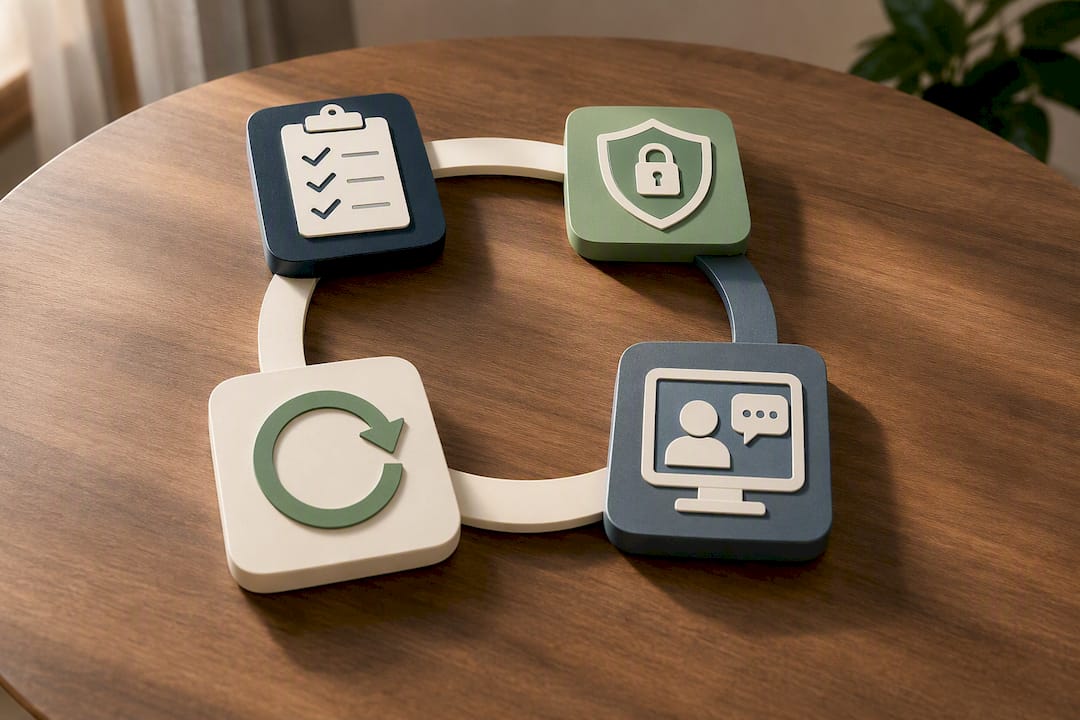
The "preparing" phase gets underrated constantly. Research on the Four P's model points out that environment and technology checks are as critical to visit quality as the clinical assessment itself, a finding from Loyola scholars' telehealth competency work. A rushed technology check is where dropped calls, poor lighting, and privacy breaches actually happen.
Beyond the Four P's, research identifying core telehealth competency domains points to skills that show up repeatedly in job postings:
- Digital literacy, comfort troubleshooting video platforms and EHR systems in real time.
- Webside manner, the telehealth equivalent of bedside manner, built through deliberate practice, not instinct.
- Remote patient monitoring competency, interpreting device data streams accurately.
- Legal and ethical awareness, knowing your scope, consent rules, and escalation duties cold.
- Documentation precision, since a virtual chart note carries the same legal weight as a paper one.
Employers accept concrete evidence of these skills over vague resume language: logged telephonic triage hours, documented remote patient monitoring shifts, and completed continuing education modules through organizations like AAACN or the American Telemedicine Association. If your current role touches any of these, understanding which skills healthcare employers prioritize helps you frame that experience correctly on an application.
How to Prove You're Ready for a Telehealth Role
- Map your license coverage against your target patient states. If you're applying to a national telehealth staffing company, list every state their patient panel touches and confirm your NLC status covers them.
- Apply for additional state licenses if gaps exist. This can take several weeks, so start before you need the role, not after an offer arrives.
- Tally your qualifying clinical hours. Pull together documentation of triage calls, remote visits, and monitoring shifts. This paperwork supports both certification eligibility and your resume narrative.
- Set up a dedicated, private workstation. A closed door, decent lighting, a reliable internet connection, and a HIPAA-compliant headset matter more than most nurses expect walking into their first virtual shift.
- Run mock visits on your platform before your first real patient. Test video quality, audio clarity, and EHR access under realistic conditions, not just a five-minute login check.
- Rewrite your resume around telehealth-relevant language. Lead with triage volume, outpatient coordination, and remote-monitoring hours instead of generic bedside descriptions.
Pro Tip: List your NLC status explicitly near the top of your application, not buried in a licensure section. Employers with multistate patient panels treat compact coverage as a strong hiring signal, and burying it costs you visibility.
Nurses who skip step three regret it fastest. Certification eligibility and interview credibility both depend on being able to produce hard numbers, not estimates, when asked how many virtual visits you've logged.
Where to Verify Current Rules and Requirements
Regulations shift, so check primary sources directly rather than relying on secondhand summaries, including this one.
- HHS telehealth licensure and HIPAA guidance covers federal privacy expectations for telehealth technology.
- HHS guidance on licensing across state lines explains cross-state practice rules and disciplinary risk.
- Your state board of nursing website publishes practice opinions and disciplinary lookup tools specific to your license.
- The current list of NLC member states helps you verify compact participation before accepting a multistate assignment.
- The American Nurses Credentialing Center (ANCC) site lists AMB-BC eligibility requirements and application steps.
- The AAACN (American Academy of Ambulatory Care Nursing) site offers telehealth competency resources and continuing education.
Bookmark your state board's page specifically. It's the one source that changes fastest and matters most to your license.
Why the Certification Question Distracts From What Actually Matters
Every nurse researching telehealth licensure requirements eventually asks the same question: which certification do I need? That question, framed that way, misses the point. Regulators care about your license and where your patient sits. Employers care about demonstrated experience. Neither group is waiting on a specific certificate before they'll let you practice or hire you.
The nurses who move into telehealth fastest are the ones who stop treating certification as a gate and start treating it as a byproduct. Log your triage hours. Document your remote visits properly. Build the habit of checking patient-state licensure before every shift instead of assuming coverage. Certification eligibility, particularly for AMB-BC, tends to follow naturally from that discipline rather than the other way around.
The regulatory landscape also rewards nurses who take the Four P's framework seriously as a personal practice standard, not just an academic model. Nurses who treat "preparing" as seriously as "providing," testing their tech, confirming privacy, checking consent, tend to avoid the documentation gaps and privacy near-misses that get less careful colleagues flagged. That discipline is what employers are actually screening for when they ask about telehealth experience, even when the job posting says "certification preferred."
— Flexible
Find Telehealth Roles That Match Your License and Experience
Once your licensure coverage and documentation are in order, the next challenge is finding employers who actually need what you've built. Some job platforms match nurses to flexible and remote roles based on license status, NLC coverage, and clinical background, instead of routing through slow, generic application queues.

When you build your profile, list your active RN license, your NLC status if applicable, and your telehealth-relevant hours, triage, remote monitoring, virtual visits, up front. This information is commonly used by employers to filter candidates for roles that match their qualifications. Create your profile and browse current telehealth nursing opportunities or explore the broader nursing jobs board to set up shift alerts that match your schedule and licensure coverage.
This article is general information, not a substitute for advice from a qualified doctor. Consult a qualified healthcare professional about your own circumstances before acting on anything here.
Sources
- Telehealth
- Telehealth Policy and the Advanced Practice Nurse — PMC (NIH)
- How to become a telehealth nurse — Sermo resources
FAQ
What are the requirements to be a telehealth nurse?
You need an active, unencumbered RN license valid in the state where your patient is located, HIPAA-compliant technology, and typically two or more years of clinical experience. Certification is preferred by many employers but not legally required.
Can you do telehealth as an RN without an NLC license?
Yes, but your license only covers you in states where you're individually licensed unless your home state participates in the Nurse Licensure Compact. Without compact coverage, you need a separate license for every state where your patients are located.
What are the five basic requirements for telemedicine?
Common frameworks point to licensure matching the patient's location, HIPAA-compliant technology, documented informed consent, adherence to the same standard of care as in-person visits, and a clear escalation protocol for issues beyond a virtual assessment's scope.
Do telehealth nurses need a special certification?
No national or state law mandates a telehealth-specific certification. Many telehealth nurses already qualify for ANCC's Ambulatory Care certification (AMB-BC) since remote triage and virtual visit hours typically count toward its practice-hour requirement.
How do I find flexible or remote telehealth nursing jobs?
Platforms like NurseFlex match nurses to telehealth and remote roles based on license status, NLC coverage, and clinical experience, letting you filter for opportunities you're already qualified for.