
Professional networking is the single most powerful career tool available to nurses. Between 60% and 85% of nursing positions are filled through professional connections and referrals rather than public job boards. That number reframes how you should think about your career. The role of networking in nursing careers goes far beyond collecting business cards. It creates access to hidden jobs, mentors, specialty placements, and the kind of insider knowledge that no job listing can provide. The U.S. Bureau of Labor Statistics projects 166,100 new nursing roles by 2034. Knowing the right people will determine who lands those positions.
How does networking uncover hidden nursing job opportunities?
The hidden job market is real, and it is large. Most nursing roles never reach public job boards because hiring managers fill them through trusted referrals before posting. Hiring managers prefer referred candidates because referrals reduce perceived hiring risk. A cold application from a stranger carries uncertainty. A recommendation from a trusted colleague carries credibility.
This dynamic means your resume alone rarely gets you the best roles. The nurse who hears about an opening from a colleague on a Tuesday has a week-long head start on everyone applying through a public listing on Friday. That gap is nearly impossible to close with credentials alone.
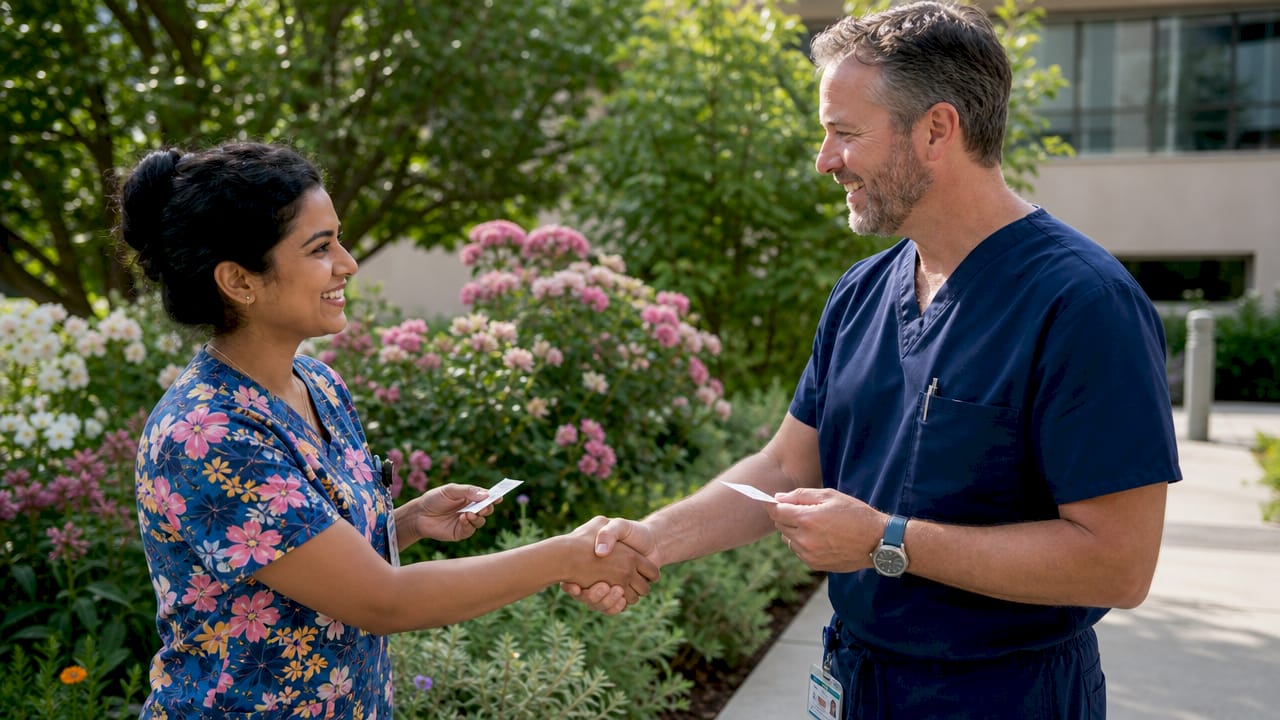
| Job Access Method | Typical Reach | Speed | Trust Level |
|---|---|---|---|
| Public job boards | Wide but competitive | Slow review process | Low, cold application |
| Professional referrals | Targeted, specific roles | Fast, often before posting | High, trusted contact |
| Recruiter relationships | Niche and unadvertised roles | Immediate for known candidates | High, ongoing relationship |
| Professional associations | Specialty-specific openings | Moderate | Moderate to high |
Experienced nurses treat recruiters as long-term contacts, not emergency contacts. Periodic check-ins every few months keep you visible and top of mind when an unadvertised role opens. A short message saying you are open to new opportunities costs two minutes and can unlock a position that never goes public.
Pro Tip: Send a brief, personal message to two or three recruiters each quarter. Reference something specific, like a certification you earned or a unit you recently worked in. Specificity makes you memorable.
Platforms like Flexiblenursingcareers are built around this same principle. Real-time job matching connects you to roles based on your skills and availability, cutting through the noise of mass job boards entirely.
What are the best practices for building a nursing professional network?
Building a nursing network starts earlier than most nurses expect. Networking in nursing school creates a professional sounding board that pays dividends for decades. Your classmates become colleagues across specialties and regions. Your clinical instructors become references and mentors. The relationships you build at 22 can open doors at 42.
Here are the most effective networking activities for nurses and nursing students:
- Join a professional nursing organization. Groups like the American Nurses Association or specialty-specific bodies give you access to conferences, committees, and members who share your clinical focus.
- Attend unit or hospital committee meetings. Volunteering for quality improvement or policy committees puts you in front of nurse leaders and administrators who influence hiring.
- Use LinkedIn with intention. Post about clinical experiences, share articles relevant to your specialty, and connect with nurses in roles you want to move into. LinkedIn enables connections worldwide and extends your reach far beyond your local hospital system.
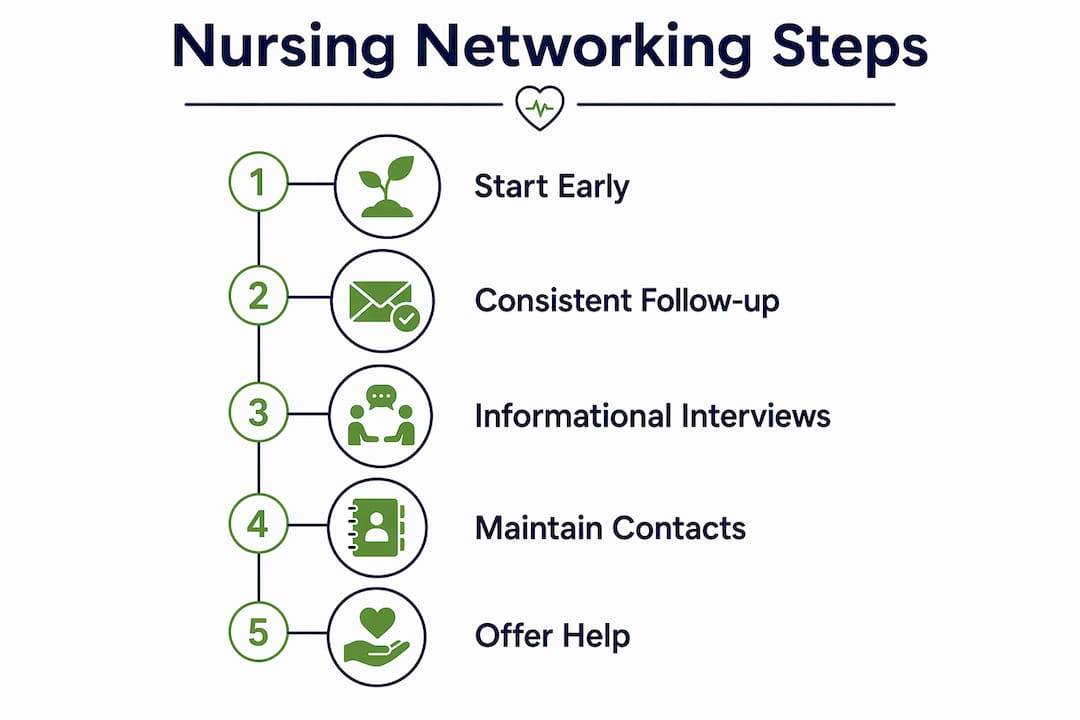
- Request informational interviews. Ask a nurse in a role you admire for 20 minutes of their time. Most nurses are generous with advice. These conversations often lead to referrals.
- Follow up after every meaningful interaction. Send a short message within 48 hours of meeting someone at a conference or event. Reference something specific from your conversation.
- Engage in online nursing communities. Forums, Facebook groups, and specialty subreddits give you access to candid conversations about roles, units, and employers.
- Mentor a nursing student. Giving back builds your reputation and keeps you connected to the next generation of nurses entering your specialty.
Long-term, consistent engagement produces the strongest results. Trusted connections that lead to referrals develop over months, not days. Authenticity matters more than volume. Ten genuine relationships outperform 500 LinkedIn connections you have never spoken to.
Pro Tip: After an informational interview, send a thank-you note and check in three months later with a relevant article or update. This single habit separates nurses who build real networks from those who collect contacts.
How does networking support career transitions in nursing?
Changing specialties or moving into alternative nursing roles is one of the hardest career moves to make alone. Job listings rarely tell you what a unit culture is actually like, how competitive a specialty is to break into, or which nurse managers are worth working for. Your network does.
Professional groups provide insider knowledge that public forums never will. Private conversations with nurses already working in a specialty give you an honest picture of the role, the workload, and the path in. That candid access is the difference between a smooth transition and a costly mistake.
Networking also functions as a preceptorship pipeline. Early-career nurses with strong networks gain access to clinical placements and specialty training that are never publicly advertised. A nursing student who knows a charge nurse in the ICU has a real advantage when ICU preceptorship spots are limited. That advantage is built through relationship, not application.
| Career stage | Primary networking benefit | Key connection type |
|---|---|---|
| Nursing student | Clinical placements, preceptors | Instructors, senior students |
| New graduate | First job referrals, unit culture insight | Classmates, clinical supervisors |
| Mid-career nurse | Specialty transitions, leadership access | Colleagues, professional associations |
| Experienced nurse | Mentorship roles, executive visibility | Nurse leaders, recruiters |
Nurses moving from bedside to remote or alternative roles face a specific challenge. Remote nursing roles in case management, telehealth, or utilization review are competitive and rarely posted publicly. Nurses who land these roles almost always do so through a contact who flagged the opening or made an introduction. Your nursing career advancement depends on having people in your corner who know where the opportunities are before anyone else does.
What long-term benefits does a strong nursing network provide?
Job access is the most visible benefit of networking, but it is not the most lasting. The deeper value of a strong nursing network shows up over years and decades.
Mentorship and professional guidance. A mentor who has navigated the path you want to take saves you years of trial and error. Mentors share what worked, what did not, and who to know. That guidance is not available in any textbook or certification course.
Access to continuing education and leadership roles. Your network tells you which certifications actually matter in your specialty, which conferences are worth attending, and which leadership programs have real career impact. Nurses in your network who sit on hiring committees or education committees can nominate you for opportunities you would never find on your own.
Current knowledge on patient care and technology. Healthcare changes fast. Nurses who are well connected hear about new protocols, technology updates, and regulatory changes from peers before those changes reach formal training programs. That real-time knowledge makes you a better clinician.
Emotional support and stress management. Nursing is demanding. A network of peers who understand your work provides a support system that reduces burnout. Knowing you can call a colleague when a shift goes wrong, or when you are weighing a major career decision, has measurable value for your mental health and longevity in the profession.
Networking is a two-way street that improves patient care collectively. When nurses share knowledge, support each other through challenges, and stay visible in their professional communities, the entire care environment benefits. The nurse who is well connected is also the nurse who is well informed.
Key takeaways
Building and maintaining a nursing network is the most reliable path to career advancement, job access, and professional growth across every stage of your career.
| Point | Details |
|---|---|
| Hidden job market dominates | 60%–85% of nursing roles are filled through connections, not public listings. |
| Start networking in school | Classmates and instructors become long-term career resources across specialties. |
| Consistency beats volume | A few genuine relationships built over months outperform hundreds of passive contacts. |
| Networks support transitions | Insider knowledge and preceptorship access make specialty changes far more manageable. |
| Long-term value extends beyond jobs | Mentorship, education access, and peer support are lasting benefits of a strong network. |
What I have learned about nursing networks after years of watching careers grow
Networking gets a bad reputation because most people misunderstand what it is. Networking is not asking for favors. It is sharing knowledge, staying visible, and showing up for other people before you need anything from them. The nurses I have seen build the strongest networks are the ones who give generously and consistently, without keeping score.
The biggest mistake nurses make is waiting until they need a job to start networking. By then, the relationships that produce referrals do not exist yet. Trust takes time. You cannot manufacture it in a crisis.
Patience is the skill nobody talks about. A connection you make at a conference in march may not lead to anything for 18 months. Then that person moves to a new hospital, remembers you, and sends a message about a role that fits you perfectly. That is how networks actually work. The payoff is real, but it is rarely immediate.
My honest advice: treat every clinical rotation, every committee meeting, and every professional event as a networking opportunity. Not in a transactional way. In a genuine, curious, interested-in-other-people way. The nurses who do this consistently build careers that look almost effortless from the outside. They are not lucky. They are connected.
— Flexible
How Flexiblenursingcareers connects you to nursing opportunities
Your network opens doors. Flexiblenursingcareers makes sure you can walk through them quickly. The platform matches you to flexible nursing jobs based on your skills, availability, and preferences, cutting the time between opportunity and placement.

Whether you are a new graduate building your first professional connections or an experienced nurse ready for a specialty change, Flexiblenursingcareers gives you real-time access to roles that fit your life. You can also use the platform alongside your network, so when a contact flags an opening, you are already registered and ready to move. Sign up, set your preferences, and let the platform do the matching while you focus on building the relationships that matter.
FAQ
What is the role of networking in nursing careers?
Networking is the primary way nurses access job opportunities, mentorship, and career advancement. Between 60% and 85% of nursing positions are filled through professional connections rather than public job boards.
When should nurses start building a professional network?
Nurses should start networking in school. Classmates, clinical instructors, and program faculty become long-term career resources across specialties and regions.
How does networking help nurses change specialties?
Networking provides insider knowledge about specialty roles and access to clinical preceptors and training placements that are rarely advertised publicly. Contacts already working in a specialty give honest, candid guidance that job listings never provide.
How often should nurses reach out to recruiters?
Experienced nurses maintain recruiter relationships with brief check-ins every few months. This keeps them visible for unadvertised roles without requiring a full job search each time.
Is LinkedIn useful for nursing career connections?
LinkedIn is one of the most effective tools for building a nursing network beyond your local area. It enables connections with nurses in target specialties and roles worldwide, and consistent activity on the platform increases your visibility to hiring managers and recruiters.