
The single priority for rural hospital staffing in 2026 is strategic continuity: build multi-year workforce plans that shrink premium locum dependence, embed telehealth and advanced practice clinicians into daily coverage, and pair both with targeted pipeline incentives like HRSA-tracked shortage-area funding, 42 CFR §485.631 compliance, and NHSC loan repayment.
TL;DR:
- Building multi-year workforce plans is crucial, focusing on reducing locum reliance, embedding telehealth, and pairing with targeted pipeline incentives.
- Reactively filling shifts with locums creates a cycle of clinical disruption, cost inflation, and lower patient satisfaction, necessitating a hybrid staffing model.
- Critical Access Hospitals must maintain a professional staff and always-available clinicians through on-call, credentialing, and contingency staffing like telehealth.
- Rural healthcare faces high vacancy and turnover rates, with current physician and nurse supply projected to meet only about 68% of demand by 2037.
- Funding programs like NHSC loan repayment, state grants, and local incentives are underused but essential tools to offset staffing barriers and attract rural healthcare workers.
Table of Contents
- What Strategies Actually Stabilize Rural Hospital Staffing?
- What Does 42 CFR §485.631 Require of Critical Access Hospitals?
- How Bad Is the Rural Staffing Shortage, Really?
- How to Build a 1/3/5-Year Rural Workforce Plan
- Can Telehealth and APCs Safely Expand Capacity?
- Which Funding and Incentive Programs Should You Use Now?
- How Do You Measure Whether Staffing Investments Are Working?
- Staffing as Institutional Survival, Not a Recruiting Problem
- How NurseFlex Jobs Helps Rural Hospitals Staff Smarter
- Where to Verify These Numbers and Requirements
- Sources
What Strategies Actually Stabilize Rural Hospital Staffing?
Reactive shift-filling is the habit hospitals need to break. The National Rural Health Association frames excessive locum reliance as a cycle: lost clinical momentum, inflated costs, and lower patient satisfaction feeding right back into more locum use. Breaking that cycle takes a hybrid model, not a single fix.
- Blend permanent hires with advanced practice clinicians (APCs), telehealth capacity, and strategic (not emergency) locum coverage.
- Recruit locally first, since rural hires with community ties stay longer than out-of-market placements.
- Offer housing and relocation assistance, since Flex Monitoring's research on Critical Access Hospitals found limited housing among the top recruitment barriers, even when pay is competitive.
- Streamline credentialing so a confirmed candidate can start in days, not months.
- Use real-time job matching platforms to cut time-to-fill without loosening credential verification. A technology-driven hiring approach now does what phone trees and fax-based agencies used to take weeks to accomplish.
Pro Tip: Budget locum spend as a bridge, not a strategy. If a role has needed locum coverage for more than two consecutive quarters, that's your signal to convert it into a permanent or telehealth-supported position.
What Does 42 CFR §485.631 Require of Critical Access Hospitals?
42 CFR §485.631 sets the floor for Critical Access Hospital (CAH) staffing: a maintained professional staff and a physician, nurse practitioner, clinical nurse specialist, or physician assistant available whenever the facility operates. That's a minimum, not a target.
Operationally, this shapes hiring priorities in three ways:
- On-call coverage requirements push administrators toward APCs who can legally provide first-line care under physician supervision.
- Credentialing timelines matter, since a compliant on-call roster needs verified providers ready before gaps open, not after.
- Contingency staffing (telehealth consults, cross-coverage agreements with nearby facilities) can satisfy availability requirements without violating the regulation, as long as response protocols are documented.
How Bad Is the Rural Staffing Shortage, Really?
A large number of Americans live in primary care Health Professional Shortage Areas as of late 2025, with a majority residing in rural communities, according to HRSA's shortage-area dashboard. That's not an abstract policy number. It's the reason your open RN requisition has been sitting unfilled since spring.
By the numbers: Median RN turnover across responding Critical Access Hospitals sits at 18.2%, with vacancy rates of 11.6% for RNs, 16.2% for LVNs, and 27.3% for APRNs. The Commonwealth Fund projects current physician supply will meet only about 68% of rural primary care demand by 2037.
Track a small dashboard monthly rather than an annual audit:
- Vacancy days per role (how long a position sits open)
- Premium labor spend as a percentage of total labor cost
- Continuity index (percentage of shifts covered by staff who worked there the prior quarter)
How to Build a 1/3/5-Year Rural Workforce Plan
A workforce plan that actually reduces locum dependence needs horizons, not a wish list.
- Set measurable targets per horizon. Year one: cut premium labor spend by a defined percentage. Year three: convert two locum-covered roles to permanent or APC-staffed positions. Year five: launch or expand a residency rotation tied to a specific service line.
- Model the real cost comparison. Run the numbers on sustained locum use against the upfront cost of permanent hiring, relocation support, and retention bonuses. Locum premiums almost always lose that comparison over 18 months or more.
- Build the pipeline deliberately. Combine rural rotations, NHSC and state loan repayment packages, and partnerships with nursing and PA schools that place students locally during training.
- Assign ownership. Name who reviews workforce KPIs, how often (quarterly is standard), and who has authority to adjust the plan when a metric drifts.
Pro Tip: Attach a dollar figure to every open shift before your next budget cycle. Boards fund workforce plans faster when the ask is framed as avoided locum cost, not headcount.
Can Telehealth and APCs Safely Expand Capacity?
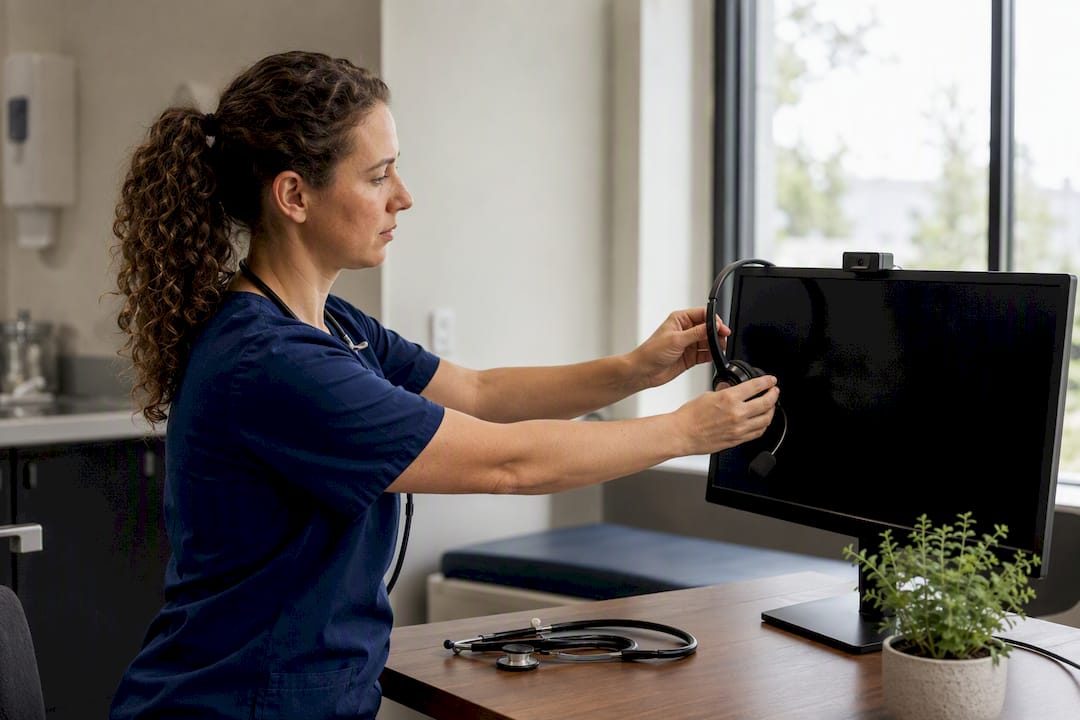
Telehealth has shifted from pandemic-era workaround to a standing capacity tool, provided broadband and reimbursement line up. Hub-and-spoke models, where a specialist consults into a rural facility while local staff deliver hands-on care, preserve the in-person relationship rural patients expect while extending specialty access that would otherwise require a three-hour drive.
Advanced practice clinicians add capacity best when embedded into interprofessional teams rather than swapped in as one-for-one physician replacements, a distinction MedCityNews's analysis of APP integration makes explicit. Before deployment, confirm three things:
- Broadband capacity at the originating site can support live video without dropped calls.
- Reimbursement policies for the specific telehealth modality are current for your state and payer mix.
- Staff have received hands-on training with the platform before the first patient encounter, not during it.
Reviewing NurseFlex Jobs's telehealth staffing options is a reasonable starting point for hospitals evaluating whether remote coverage fits a specific gap.
Which Funding and Incentive Programs Should You Use Now?
Federal and state programs exist specifically to offset the cost of rural placement, and most go underused simply because nobody packages them into the hiring offer.
- NHSC and state loan repayment programs typically require a multi-year service commitment in a designated shortage area in exchange for tuition debt relief. Layer this into the offer letter, not a separate conversation months later.
- Rural Health Transformation Program funding, part of the broader push states are making with federal dollars, according to NCSL's workforce analysis, supports workforce investments at the facility level. Check your state's specific application window and matching requirements.
- Local incentives like sign-on bonuses, temporary housing, and spousal employment assistance address the non-wage barriers that block recruitment even at competitive pay, per Flex Monitoring's CAH workforce research.
How Do You Measure Whether Staffing Investments Are Working?
A compact dashboard converts staffing effort into a number your board will fund.
- Track vacancy days, RN and APRN vacancy percentages, premium labor spend, and the continuity index monthly.
- Calculate savings by comparing current premium labor spend against the trailing four-quarter average as locum reliance drops.
- Watch continuity index dips as an early warning sign. A falling continuity score usually precedes a turnover spike by one to two quarters.
Facilities working to fill temporary vacancies fast without eroding these metrics tend to treat short-term coverage as a bridge tactic, tracked against the same dashboard as permanent hiring.
Staffing as Institutional Survival, Not a Recruiting Problem
Predictable staffing isn't a nicety. Hospitals that plan multiple years out see steadier finances and steadier care, because clinical teams that work together longer catch more, communicate faster, and burn out less. That's not a recruiting insight. It's an operations insight administrators too often outsource to whoever answers a locum agency's phone.
NurseFlex Jobs was built around that same premise: matching that respects credentials and continuity beats matching that just fills a slot. For deeper operational detail, the sections above on 42 CFR §485.631 and multi-year planning are worth revisiting before your next budget cycle.
— Flexible
How NurseFlex Jobs Helps Rural Hospitals Staff Smarter
NurseFlex Jobs is built for the exact gap this article describes: the space between an urgent shift you need covered tomorrow and a five-year workforce plan you're still building. Real-time matching finds credentialed nurses and healthcare professionals based on availability and specialty, so urgent gaps get filled without defaulting to expensive last-minute locum rates.

The platform supports the full continuum rural facilities need: travel and temporary placements that can convert into permanent hires once fit is proven, telehealth-ready provider matching, and streamlined credentialing that keeps compliance intact under 42 CFR §485.631 requirements. That combination lets administrators pilot a staffing change (a telehealth rotation, a trial hire, a coverage bridge) without committing to a full-scale contract before proving it works. Hospitals ready to see open shifts filled faster can browse current nursing job postings or visit the employer page to request a pilot placement and see how the matching process runs against a real vacancy.
Where to Verify These Numbers and Requirements
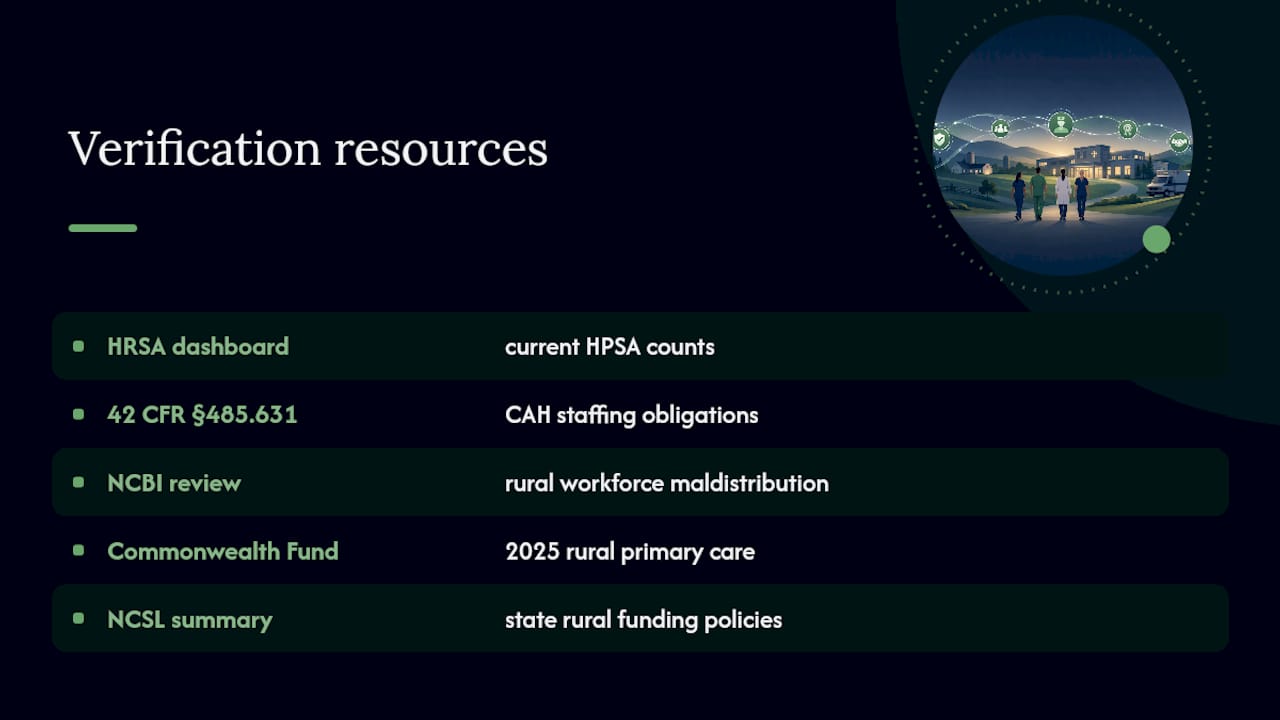
For direct follow-up on the figures and regulations cited above, consult HRSA's shortage-area dashboard for current HPSA counts, the full text of 42 CFR §485.631 for CAH staffing obligations, and the NCBI systematic review on rural workforce maldistribution. The Commonwealth Fund's 2025 rural primary care analysis and NCSL's rural workforce policy summary cover state-level funding mechanisms in more depth than any single article can.
Sources
- HRSA shortage-area dashboard
- 42 CFR §485.631 (CAH Conditions of Participation)
- Rural Healthcare Workforce: A Systematic Review (NCBI/NIH)
- The State of Rural Primary Care in the United States (Commonwealth Fund, 2025)
- CAH workforce barriers and facilitators (Flex Monitoring / University analysis, 2025)