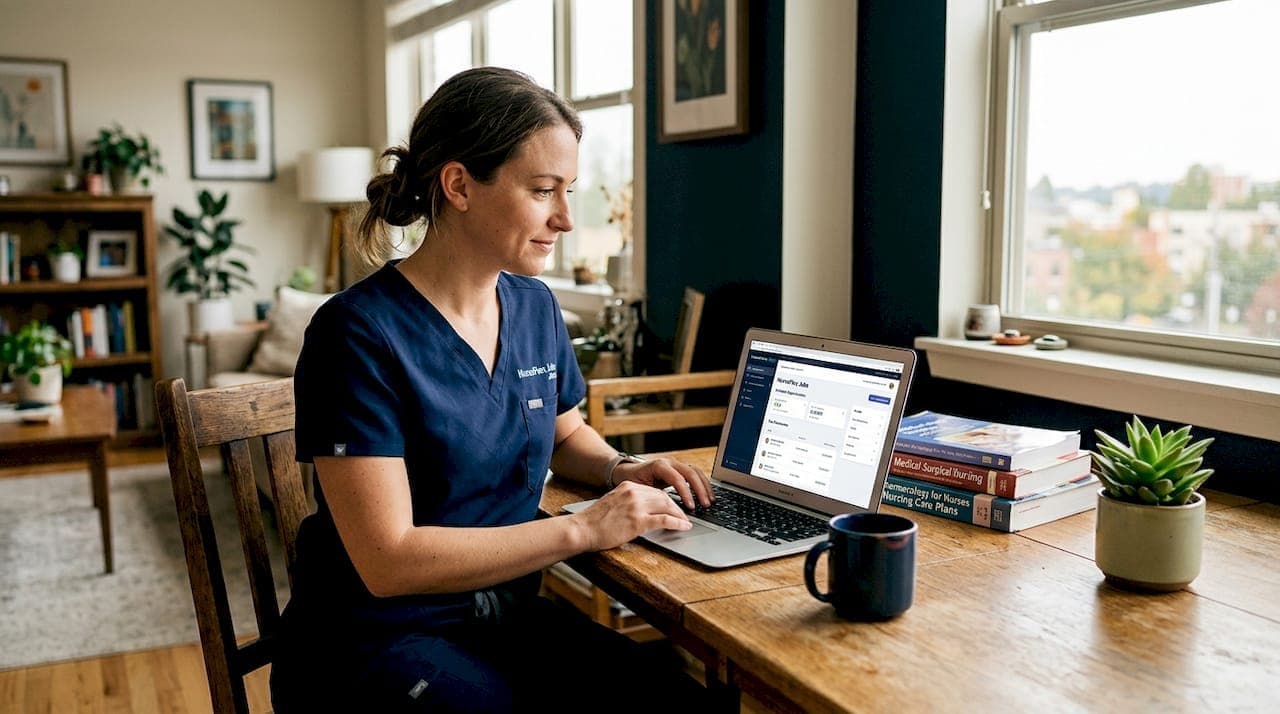
Healthcare platforms are purpose-built recruitment systems that match nurses and practitioners to roles based on verified credentials, availability, and specialty fit. This is the core reason why healthcare platforms beat job boards: they replace passive listings with active, data-driven placement. Traditional job boards depend on nurses finding and applying to postings manually, a model that creates friction and disengagement before a recruiter ever makes contact. Platforms like Incredible Health and MedGeo operate differently. They surface candidates to employers, automate early screening, and keep communication moving. The result is faster hiring, better role fit, and measurably higher retention.
Why healthcare platforms beat job boards for candidate engagement
The engagement gap between healthcare platforms and traditional job boards is not subtle. Platforms reduce friction at every step by automating communication, scheduling, and follow-up. Job boards, by contrast, place the entire burden on the candidate to search, apply, and wait. Qualified nurses disengage before a recruiter ever responds because slow follow-up and inconsistent communication signal that the employer is not serious.
Healthcare platforms also reach passive candidates. Most experienced nurses are not actively browsing job boards on a Tuesday afternoon. They are working shifts, managing licenses, and planning their next career move quietly. Platforms embed employer presence in trusted professional environments, which means a nurse does not have to be actively searching to discover a relevant opportunity. Candidates on MedGeo platforms engage for an average of 7 minutes, far longer than typical job board browsing. That depth of engagement signals genuine interest, not accidental clicks.

AI-powered workflows take this further. Voice interview agents and automated scheduling respect a nurse's time by removing the back-and-forth that kills momentum in traditional hiring. A nurse working a 12-hour night shift cannot respond to a recruiter email at 2 p.m. on a Wednesday. Platforms that automate interview scheduling around a candidate's actual availability convert more interest into completed applications.
The benefits of healthcare job sites built around engagement include:
- Automated follow-up that keeps candidates informed at every stage
- Passive candidate targeting through professional association networks
- AI screening that filters for credential and specialty fit before human review
- Scheduling tools that adapt to shift-based healthcare schedules
- Consistent communication that reduces offer acceptance of competing roles
Pro Tip: When evaluating a platform, check its average response time to applicants. Platforms that respond within 24 hours retain significantly more qualified candidates than those relying on manual recruiter outreach.
What hidden opportunities do healthcare platforms provide that job boards miss?
Many healthcare roles never appear on public job boards at all. Hospitals and health systems fill urgent or sensitive positions through recruitment partners, internal referrals, and staffing networks before a public listing is ever created. Employers use recruitment partners and internal referrals for confidential and time-sensitive staffing needs, which means a nurse relying solely on job boards is only seeing a fraction of what is actually available.
This is one of the most underappreciated healthcare platforms advantages. A platform with embedded referral networks and employer partnerships surfaces roles that a job board never will. For a nurse practitioner seeking a specific specialty or a travel nurse targeting a particular region, this access is not a minor convenience. It is the difference between finding the right role and settling for whatever happens to be posted publicly that week.
The structural difference matters here. Job boards are directories. Platforms are networks. A directory shows you what is listed. A network connects you to what is available, including roles that are being quietly filled before they go public.
"The hidden job market in healthcare is not a myth. It is a direct result of how health systems manage staffing risk. Platforms that operate inside those networks give candidates access that no job board can replicate."
Practical ways platforms expose hidden opportunities include:
- Direct partnerships with hospital systems that share roles before public posting
- Referral pipelines built into the platform's professional community
- Specialty-specific matching that surfaces roles aligned to your exact credentials
- Confidential search options that let you explore without alerting your current employer
Pro Tip: Use a passive job searching strategy on healthcare platforms to stay visible to employers without actively applying. Many of the best roles come to candidates who are simply present on the right platform.
How do healthcare platforms accelerate hiring and improve retention?
The numbers here are hard to argue with. Healthcare platforms cut time-to-fill for permanent nursing roles from an industry average of 86 days to a median of 24 days, with the fastest quartile closing roles in 15 days. That is not a marginal improvement. It is a structural shift in how quickly a nurse can move from application to first shift.
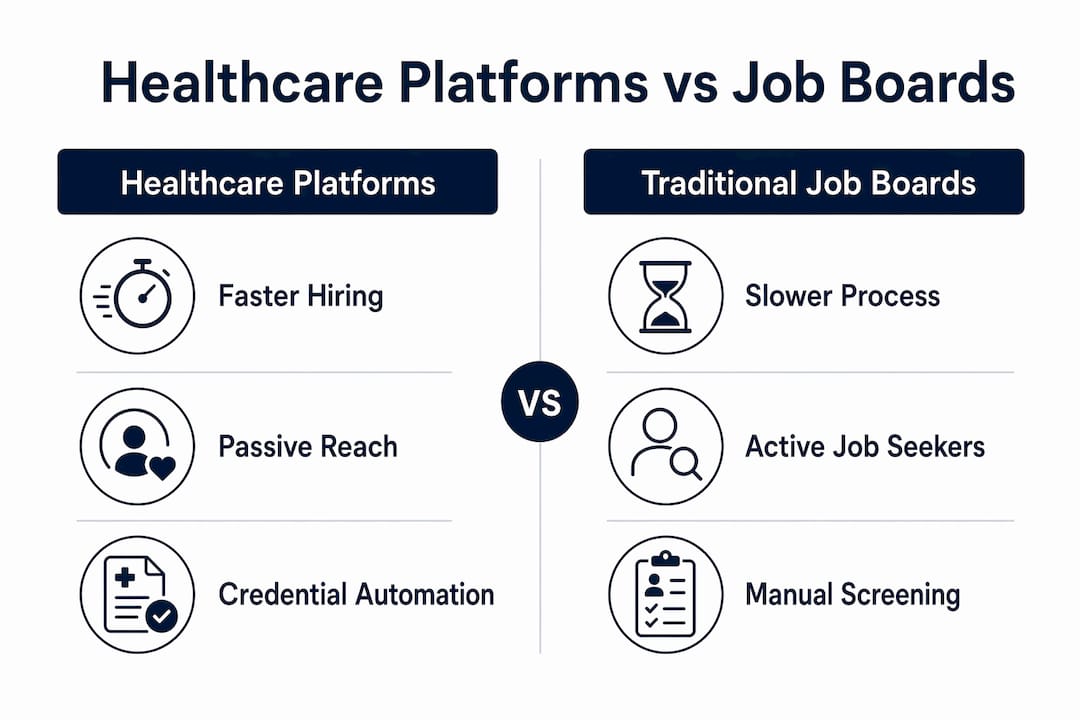
The mechanism behind this speed is automated credentialing and specialty fit screening. Platforms verify licenses, certifications, and specialty requirements before a human recruiter ever reviews a profile. This removes the most time-consuming step in traditional hiring and eliminates the back-and-forth that stalls job board applications for weeks. Credentialing and specialty fit checks are the pre-screening steps that platforms automate to compress time-to-fill.
Retention is the other side of this equation. Platform-driven hires show approximately 15% higher one-year retention than the industry average. Better matching at the front end means fewer mismatches that lead to early turnover. For a nurse, this translates to landing in a role that actually fits your schedule, specialty, and career goals rather than one that looked good on a generic job listing.
The financial stakes for employers reinforce why this matters to candidates too. Unfilled nursing positions cost employers between $5,000 and $9,000 per month, exceeding $20,000 when vacancies stretch past 80 days. Employers using platforms are motivated to move fast and match well because the cost of getting it wrong is significant. That urgency benefits you as a candidate.
| Metric | Healthcare platform | Traditional job board |
|---|---|---|
| Median time-to-fill | 24 days | 86 days (industry average) |
| Fastest quartile time-to-fill | 15 days | Varies, often 60+ days |
| One-year retention rate | ~15% above average | Industry average |
| Candidate response rate | High (automated follow-up) | Low (nearly 90% never hear back) |
| Credential verification | Automated pre-screening | Manual, post-application |
Pro Tip: If you want to get hired fast, complete your credential and license verification on a platform before you start applying. Profiles with verified credentials move through employer review in hours, not days.
What are the key disadvantages of traditional job boards for healthcare professionals?
Job boards were built for a general labor market. Healthcare recruitment has specific requirements around licensing, credentialing, shift availability, and specialty fit that generic platforms were never designed to handle. The result is a set of structural disadvantages that affect every nurse or practitioner who relies on them.
Nearly 90% of applicants on traditional healthcare recruiting funnels never hear back from recruiters. This is not an edge case. It is the default outcome of a system where recruiters manage large requisition loads manually and capacity bottlenecks make manual screening unsustainable. The nurse who applies and hears nothing is not unlucky. She is the norm.
The specific job board disadvantages that affect healthcare professionals most directly are:
- Active-only reach. Job boards only surface roles to nurses who are actively searching. If you are not logged in and browsing, you are invisible to employers.
- Volume over quality. ATS-mediated submissions are often never reviewed by humans. High application volumes create noise, not signal.
- Ghost listings. Roles that have already been filled or are no longer active remain posted, wasting your time and creating false expectations about what is available.
- No dynamic matching. Job boards do not learn your preferences, credentials, or availability. Every search starts from zero.
- Application fatigue. Submitting dozens of applications with no feedback loop leads to disengagement. Nurses who experience this pattern often stop searching entirely, even when good roles exist.
Understanding what a healthcare jobs board actually offers versus what a purpose-built platform delivers makes the choice clear. Job boards are a starting point. For nurses serious about finding the right role efficiently, they are not a finishing point.
Key takeaways
Healthcare platforms outperform traditional job boards because they automate credentialing, reach passive candidates, and cut time-to-fill from 86 days to 24 days while delivering 15% higher one-year retention.
| Point | Details |
|---|---|
| Faster time-to-fill | Platforms reduce hiring time from 86 days to a median of 24 days through automated screening. |
| Hidden job market access | Many healthcare roles are filled through platform networks before appearing on public job boards. |
| Higher retention rates | Platform-matched hires show approximately 15% better one-year retention than industry averages. |
| Passive candidate reach | Platforms surface roles to nurses not actively searching, expanding opportunity beyond active job seekers. |
| Communication quality | Nearly 90% of job board applicants never hear back; platforms automate follow-up to keep candidates informed. |
What I've learned from watching nurses choose platforms over job boards
I have seen nurses spend months on job boards applying to roles that were already filled, waiting for responses that never came, and accepting positions that were a poor fit because they ran out of patience. The job board model is not broken in a dramatic way. It is broken in a quiet, grinding way that wears down good candidates over time.
The shift I consistently see with platform-based hiring is that nurses stop feeling like applicants and start feeling like candidates. That distinction matters. An applicant submits a form and waits. A candidate is visible, matched, and communicated with. The platform model treats your credentials, availability, and specialty as data points that work for you around the clock, not just when you happen to be logged in and searching.
What I tell nurses is this: your presence on the right platform is more valuable than your activity on the wrong one. Spending two hours optimizing your profile on a healthcare-specific platform will outperform two weeks of job board applications. The platform does the matching. You just have to be there.
The other thing worth saying directly: response rate is a signal. If a platform or employer does not communicate clearly and quickly during the hiring process, that behavior does not improve after you accept the offer. Hiring process quality reflects organizational culture. Platforms that enforce communication standards on employers are doing you a favor before you ever start a shift.
— Flexible
Find your next healthcare role with Flexiblenursingcareers
Flexiblenursingcareers connects nurses and healthcare professionals with flexible, verified job opportunities matched to their credentials, availability, and specialty. The platform removes the friction of traditional job searching by handling credential verification and real-time matching automatically.

You do not need to spend weeks applying to roles that may already be filled. Sign up on NurseFlex Jobs and let the platform surface roles that fit your schedule and specialty. Registered users move from profile to placement faster than any job board process allows. Your next role is already waiting. You just need to be visible in the right place.
FAQ
Why do healthcare platforms outperform job boards for nurses?
Healthcare platforms automate credential verification, reach passive candidates, and maintain consistent communication throughout hiring. Traditional job boards rely on active searching and manual recruiter follow-up, which causes most qualified nurses to disengage before placement.
How much faster is hiring through a healthcare platform?
Platform-based hiring cuts median time-to-fill from 86 days to 24 days for permanent nursing roles, with the fastest placements closing in 15 days. This speed comes from automated pre-screening and credential checks that job boards do not perform.
What is the hidden healthcare job market?
The hidden job market refers to roles filled through recruitment partners, referrals, and platform networks before they are publicly posted. Nurses relying only on job boards miss these opportunities entirely.
Do healthcare platforms help with work-life balance?
Yes. Purpose-built platforms like those on Flexiblenursingcareers match roles to your stated availability and shift preferences. This produces better fit from day one, which is a primary driver of the higher retention rates platform hires show compared to job board placements.
How do I apply to healthcare vacancies more efficiently?
Complete your credential and license verification before applying, and keep your availability current on the platform. Reviewing how to apply efficiently on healthcare platforms gives you a clear process for moving from profile to offer faster than traditional application methods allow.